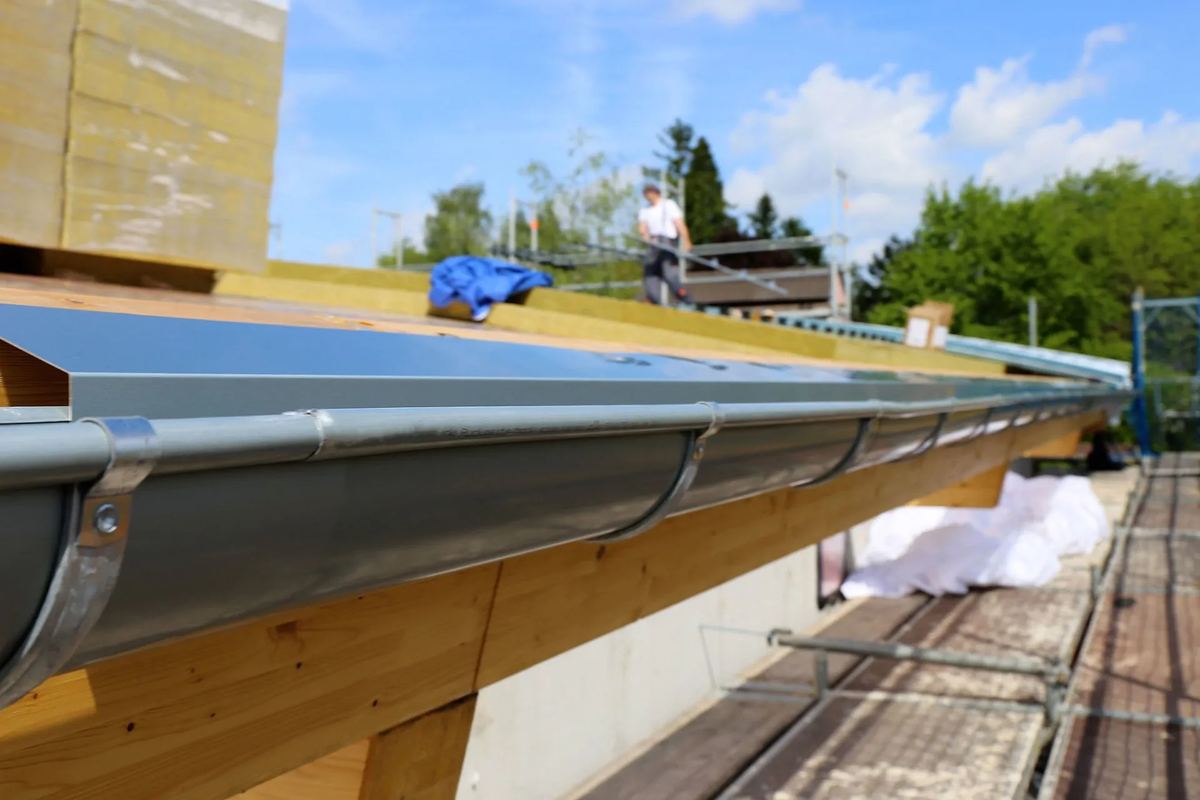
Water stains beneath the roofline, peeling paint along the fascia, or moisture appearing near the edges of your roof may indicate that rainwater is not draining as intended. Although these symptoms can have several causes, roof drip edge problems are one possible explanation, particularly when the metal flashing at the roof perimeter is missing, damaged, or incorrectly installed.
A drip edge is a relatively small component of an asphalt shingle roofing system, but its position is important. It helps direct water away from vulnerable roof edges and prevents runoff from traveling backward toward exposed wood and other building materials.
When the flashing is poorly positioned or does not integrate correctly with the surrounding roofing layers, water may reach areas that should remain protected. These defects can remain unnoticed until stains, loose metal, or moisture damage become visible.
For homeowners in Greentown, Hawley, Tafton, and the Lake Wallenpaupack area, recognizing roof drip edge problems can help identify installation defects before repeated moisture exposure causes more extensive damage.
The important step is determining whether the issue originates from the drip edge itself, the surrounding roofing materials, or another drainage component.
What Is a Roof Drip Edge and Why Is It Important?
A roof drip edge is a metal flashing component installed along the perimeter of many sloped roofing systems, particularly asphalt shingle roofs. It typically includes a horizontal flange that extends onto the roof deck and a downward-facing section that helps guide runoff away from the roof edge.
The outward-facing profile is designed to encourage water to separate from the metal rather than follow its underside toward vulnerable materials.
Without an appropriate water-shedding detail, rainwater may contact the edge of the roof sheathing, fascia, or other components.
Common drip edge materials include aluminum and galvanized steel, although the appropriate material depends on the roofing system and installation requirements.
Drip Edge at the Eaves
Eaves are the lower edges of a sloped roof where water normally drains toward the gutters or away from the building.
For many asphalt shingle assemblies, the drip edge is installed along the eaves before the underlayment is placed over it. This arrangement allows water traveling over the underlayment to drain outward.
Some roofing assemblies use different approved arrangements, particularly where specialized self-adhered membranes are required.
The correct installation sequence should follow the roofing manufacturer’s instructions and applicable building requirements.
Drip Edge at the Rakes
Rakes are the sloped roof edges found along the gable ends of a building.
Unlike the typical eave arrangement, drip edge flashing at the rakes is commonly installed over the roofing underlayment.
This positioning helps protect the exposed edge from wind-driven moisture.
The distinction matters because placing flashing and underlayment in the wrong sequence can create unintended water pathways.
Why the Drip Edge Profile Matters
Different drip edge products have different profiles, dimensions, and outward bends.
The profile must guide runoff away from the vulnerable roof perimeter while remaining compatible with the roof covering.
A flashing section that is too short, poorly shaped, or unsuitable for the roof assembly may not perform as intended, even when the metal itself is undamaged.
7 Warning Signs of Roof Drip Edge Problems
The most noticeable signs of roof drip edge problems often appear near the roof perimeter rather than in the middle of the roof.
Some defects are visible from the ground, while others require professional examination of the flashing and surrounding materials.
1. Water Stains or Peeling Paint Along the Fascia
Discoloration beneath the roof edge may indicate that rainwater is repeatedly contacting surfaces that should remain protected.
In some cases, water behind fascia components or moisture around the upper edge of the fascia can be associated with defective flashing.
Peeling paint, dark stains, or persistent dampness may develop when runoff travels backward instead of separating from the edge properly.
However, these symptoms can also result from gutter defects or other moisture sources. The location of the stain alone does not confirm that the drip edge is responsible.
2. Visible Gaps Between the Flashing and Roof Edge
A drip edge that appears separated, twisted, or displaced may no longer provide the intended protection.
Excessive gaps can allow rainwater to reach vulnerable areas along the roof perimeter.
However, some space between the drip edge and adjacent components is part of a correctly designed installation.
The concern is whether the arrangement allows water to enter or bypass the intended drainage path, not simply whether a visible gap exists.
3. Darkened or Swollen Roof Sheathing Edges
Repeated moisture exposure can cause discoloration, swelling, or deterioration of wood-based sheathing near the roof perimeter.
These changes may indicate that water has reached the edge of the roof deck.
However, roof edge water damage does not automatically prove that the drip edge was installed incorrectly.
The condition of nearby shingles, underlayment, flashing, and drainage components should be evaluated before identifying the cause.
4. Missing Metal Drip Edge Flashing
A missing roof drip edge can leave sections of the roof perimeter without the protection intended by that flashing detail.
The absence of metal flashing is especially important on roofing systems designed or required to include it.
Without the appropriate detail, water may contact exposed roof-edge materials.
Whether a particular roof requires drip edge flashing depends on the roofing assembly, manufacturer instructions, and applicable building codes.
5. Water Tracking Beneath the Shingle Edge
Rainwater should follow the designed drainage path from the roof covering toward the exterior.
If water repeatedly travels backward beneath the shingle edge, the flashing and nearby roofing layers deserve investigation.
This condition may occur when the drip edge has an unsuitable profile, the surrounding materials are incorrectly positioned, or the roof edge has been disturbed during previous work.
6. Bent, Loose, or Corroded Drip Edge Sections
A damaged drip edge may appear lifted, bent, loose, or affected by corrosion.
Physical impact, improper fastening, previous roofing work, or weather exposure can contribute to these conditions.
If the flashing moves or separates from adjacent sections, the intended water-shedding arrangement may be compromised.
Not every minor surface mark affects performance, but significant deformation or loose attachment should be evaluated.
7. Repeated Moisture Around Roof Corners
Roof corners often involve multiple overlapping roofing and flashing details.
When the metal sections are poorly connected or their profiles do not meet correctly, water may reach the underlying materials.
Recurring dampness around a corner can indicate that the flashing transition requires closer examination.
The actual source must be confirmed because moisture may travel from another location before becoming visible.
What Causes Improper Roof Drip Edge Installation?
Improper roof drip edge installation can create problems even when the visible shingles appear properly installed.
In many cases, the issue involves how the flashing interacts with other roofing materials rather than the condition of the metal alone.
Incorrect Underlayment and Flashing Sequence
The relationship between the drip edge and underlayment determines how water moves across the layers of the roofing system.
For typical asphalt shingle installations, the underlayment overlaps the drip edge at the eaves, while the rake drip edge is placed over the underlayment.
If the layers overlap incorrectly, water can be directed beneath a component instead of safely outward.
Certain roof assemblies have approved exceptions, so the sequence should be evaluated against the specific product and applicable installation requirements.
Flashing That Does Not Extend Far Enough
A drip edge must extend sufficiently onto the roof deck and downward along the perimeter to perform its intended function.
When the horizontal flange is too narrow or the downward-facing section is inadequate, the assembly may not protect the surrounding materials as designed.
The correct dimensions depend on the flashing product, roofing assembly, and applicable requirements.
An unsuitable profile may also encourage water to follow the underside of the metal rather than separate from the roof edge.
Improper Fastener Placement
Drip edge flashing must remain securely attached during normal roof exposure.
Incorrectly positioned fasteners, inadequate fastening, or excessive movement can allow metal sections to loosen.
Once the flashing moves, joints and overlaps may become distorted.
Proper fastening should follow the relevant manufacturer’s instructions rather than relying on an assumed spacing for every roofing system.
Poor Overlap Between Metal Sections
Drip edge flashing is commonly installed in individual lengths that overlap at their ends.
If those joints are improperly positioned or insufficiently overlapped, they can become vulnerable points along the roof perimeter.
Water entering a defective joint may reach the sheathing edge or other components.
The contractor should ensure that adjacent sections form a continuous, appropriately secured water-shedding detail.
Incorrectly Formed Roof Corners
Roof corners require careful cutting, bending, and joining of the flashing.
Poorly formed transitions may leave openings or create areas where water does not drain correctly.
These defects can be difficult to identify from the ground because the visible shingles may conceal the underlying arrangement.
Material Compatibility and Corrosion
Some metal combinations or environmental conditions can increase the likelihood of corrosion.
If the flashing material is unsuitable for the application, deterioration may eventually affect the section’s integrity.
Professionals should select corrosion-resistant materials compatible with the roofing system and adjacent components.
Damage During Previous Roofing or Gutter Work
Roof replacement, gutter installation, and exterior repairs can sometimes disturb existing flashing.
A section may become bent, detached, or incorrectly repositioned during the work.
If the metal is not restored to the correct arrangement, drip edge flashing problems may develop even though the original installation was satisfactory.
Roof Drip Edge Problems vs. Gutter Problems: How to Identify the Difference
Not every stain beneath the roofline originates from defective drip edge flashing.
Gutters and roof-edge flashing interact, but they perform different functions.
The drip edge helps direct runoff away from vulnerable roofing materials, while the gutter collects and carries water toward the downspouts.
Understanding this distinction is important because repairing the wrong component may leave the original problem unresolved.

When the Drip Edge Is the Likely Concern
A flashing-related problem becomes more likely when the metal is visibly missing, displaced, or incorrectly positioned.
Water traveling beneath the roofing layers or reaching the exposed sheathing edge may also indicate that the roof-edge flashing arrangement needs assessment.
When the Gutter System Is the Likely Concern
Gutters may overflow because of obstructions, inadequate slope, damaged components, or drainage limitations.
Water appearing behind a gutter may involve its mounting position, a gutter apron detail, or another roof-to-gutter transition.
These conditions require an evaluation of the gutter system rather than assuming the drip edge is defective.
When Both Components Need Evaluation
Sometimes the gutter and drip edge are individually intact, but their relationship does not direct water as intended.
For example, a gap between the discharge path from the roof covering and the gutter may allow runoff to bypass the intended collection area.
A professional assessment should trace where the water leaves its intended path and determine which component requires correction.
Replacing a gutter will not necessarily correct defective roof flashing, and replacing the drip edge will not resolve an obstructed downspout.
Can a Damaged Roof Drip Edge Be Repaired?
Some roof drip edge problems can be corrected locally, while others require replacing the affected metal sections.
The appropriate solution depends on the extent of damage, the condition of nearby shingles, and whether the existing flashing arrangement can be restored reliably.
When a Local Repair May Be Possible
A limited repair may be appropriate when a short section of flashing has loosened or shifted without significant corrosion or deformation.
The surrounding roofing materials must remain suitable, and the corrected metal should restore the intended water-shedding path.
However, repairing one isolated area is unlikely to solve a problem caused by an incorrect installation sequence along the entire roof edge.
When Drip Edge Replacement Is Necessary
Replacement may be appropriate when the metal is severely bent, missing, corroded, incorrectly sized, or unable to remain securely attached.
An incorrectly installed section may also need to be removed and repositioned rather than simply covered with sealant.
Because the flashing is integrated with the roof covering, access may require carefully lifting or removing adjacent shingles and underlayment.
Why Applying Sealant Is Not Always an Effective Solution
Sealant may have a role in certain manufacturer-approved roofing details, but it is not a universal substitute for correctly installed flashing.
If the underlying problem involves reversed overlaps, unsuitable flashing dimensions, or defective joints, covering the visible gap may leave the original water pathway unchanged.
A successful repair should restore the intended drainage arrangement rather than conceal the symptom.
When Professional Roof Repairs Are Appropriate
If the existing roof remains generally sound and the damage is localized, a focused repair may be more appropriate than major roofing work.
Wallenpaupack Roofers provides professional roof repair services in Greentown, PA for roofing concerns that may include damaged flashing and localized water intrusion.
A professional assessment can help determine whether the affected roof-edge details can be repaired or require replacement.
What Happens During Professional Drip Edge Repair?
The first step is identifying the actual defect and determining whether surrounding roofing materials have been affected.
The contractor may inspect the flashing profile, joints, fasteners, underlayment relationship, and adjacent shingle edges.
If the existing flashing is unsuitable, the affected roofing materials may need to be lifted or removed to access the metal safely.
The damaged section can then be removed, corrected, or replaced according to the requirements of the roofing assembly.
Before restoring the roof covering, the contractor should verify that the flashing directs water outward and that the surrounding materials remain appropriate for continued use.
If moisture has reached the sheathing or fascia, those materials may need further evaluation.
The objective is to correct the cause of the roof-edge problem, not simply improve the appearance of the metal.
What Happens If Roof Drip Edge Problems Are Ignored?
An unresolved flashing defect can allow repeated moisture exposure near the roof perimeter.
Over time, this may contribute to staining, deterioration of adjacent exterior finishes, or damage to susceptible wood components.
The extent of the consequences depends on how much water reaches the affected area and how long the condition continues.
A relatively small defect may remain localized, while repeated exposure can allow concealed damage to develop.
However, roof edge water damage can originate from more than one source, and not every flashing defect results in significant deterioration.
The best response is to identify the problem early and determine whether corrective work is necessary.
How Proper Drip Edge Installation Helps Prevent Future Problems
Preventing recurring roof drip edge problems starts with choosing a suitable flashing product and integrating it correctly with the roofing system.
During new roofing work, the contractor should consider the drip edge profile, roof geometry, underlayment arrangement, fastener requirements, and connections between sections.
Confirm the Correct Roof-Edge Profile
The flashing should be appropriate for the roof assembly and designed to direct runoff beyond vulnerable edges.
A properly selected profile helps prevent water from following the underside of the metal toward exposed wood.
Follow the Required Installation Sequence
The drip edge and underlayment must overlap in the correct direction for the specific roofing assembly.
The commonly used eave and rake arrangements are described in the Asphalt Roofing Manufacturers Association’s guidance on drip edge installation.
However, product specifications and local building requirements should always govern the actual installation.
Check Fastening and Section Joints
Metal flashing should be secured with appropriate fasteners and properly connected at joints and corners.
The finished detail should remain stable and provide a continuous path for water to drain away from vulnerable materials.
Evaluate the Flashing During New Roof Installation
Drip edge flashing should be considered part of the complete roofing assembly rather than an isolated finishing accessory.
Wallenpaupack Roofers offers new roof installation services that include attention to underlayment, flashing, and other important roofing components.
Avoid Unsafe DIY Inspections
Homeowners should not attempt to lift shingles, remove flashing, or access steep roof edges without appropriate training and safety equipment.
A professional can inspect concealed flashing details and determine whether the installation requires correction.
Roof Drip Edge Problems in Greentown and Lake Wallenpaupack, PA
Roofing systems in Greentown, Hawley, Tafton, Lakeville, and surrounding Lake Wallenpaupack communities experience seasonal rain, snow, freezing temperatures, and temperature changes.
These conditions make proper roof-edge water management particularly important.
During heavy rainfall, runoff moves across the roofing surface toward the eaves. During periods of snowmelt, water may also move toward roof-edge details while surrounding materials remain cold.
If the drip edge is missing, damaged, or poorly integrated with the roofing system, vulnerable perimeter materials may experience unwanted moisture exposure.
However, seasonal weather does not automatically establish that a flashing defect exists.
The condition of the metal, installation arrangement, and surrounding roofing materials should determine whether repairs are necessary.
For homeowners in Northeast Pennsylvania, identifying the actual cause of recurring moisture is more useful than assuming that every stain beneath the roofline requires gutter replacement or major roofing work.
Noticing Roof Edge Water Damage? Contact Wallenpaupack Roofers
Visible flashing damage, recurring stains along the fascia, or water appearing where it should not may indicate a problem with the roof-edge drainage arrangement.
These symptoms deserve attention, but they do not automatically mean your roof needs replacement.
Wallenpaupack Roofers serves homeowners and property owners in Greentown, PA, and surrounding Lake Wallenpaupack communities.
Our team can help evaluate roof-edge concerns, examine the condition of adjacent roofing materials, and discuss whether localized repairs or additional roofing work may be appropriate.
If you are concerned about a missing roof drip edge, loose flashing, or moisture near the roof perimeter, identifying the source of the problem is the first step toward choosing an effective solution.
Call (570) 390-3166 or contact Wallenpaupack Roofers to request a roofing assessment. Tell our team what you have noticed, and we can discuss the appropriate next steps for your property.
Frequently Asked Questions About Roof Drip Edge Problems
What are the most common roof drip edge problems?
Common issues include missing flashing, incorrect underlayment overlaps, loose or bent metal sections, inadequate flashing dimensions, and poorly connected joints. These conditions may interfere with the intended drainage path at the roof perimeter.
Can a missing roof drip edge cause water damage?
Yes. A missing roof drip edge can leave vulnerable perimeter materials exposed to repeated moisture, particularly where the roofing system is designed or required to include flashing. The extent of potential damage depends on the roof assembly and surrounding conditions.
Does drip edge flashing go over or under the underlayment?
For many asphalt shingle systems, the drip edge is installed beneath the underlayment at the eaves and over the underlayment at the rakes. Certain assemblies may use approved alternatives, so manufacturer instructions and applicable codes should always be followed.
Why is there water behind fascia boards?
Water behind fascia may be related to flashing defects, gutter positioning, drainage problems, or other roof-edge conditions. The actual source should be identified before deciding which component needs repair.
Can a bent or damaged drip edge be repaired?
Sometimes. A localized correction may be possible if the metal can be restored reliably and surrounding materials remain sound. Severely bent, corroded, or incorrectly installed sections may need replacement.
Are drip edge flashing problems common after roof replacement?
They can occur if flashing is incorrectly installed, reused despite damage, or disturbed during other roofing work. However, new roofing work does not automatically mean a drip edge problem exists.
Should I replace my gutters to fix roof drip edge problems?
Not necessarily. Gutters and drip edge flashing have different functions. A gutter replacement will not correct missing or incorrectly installed flashing, so the source of the drainage issue should be identified first.