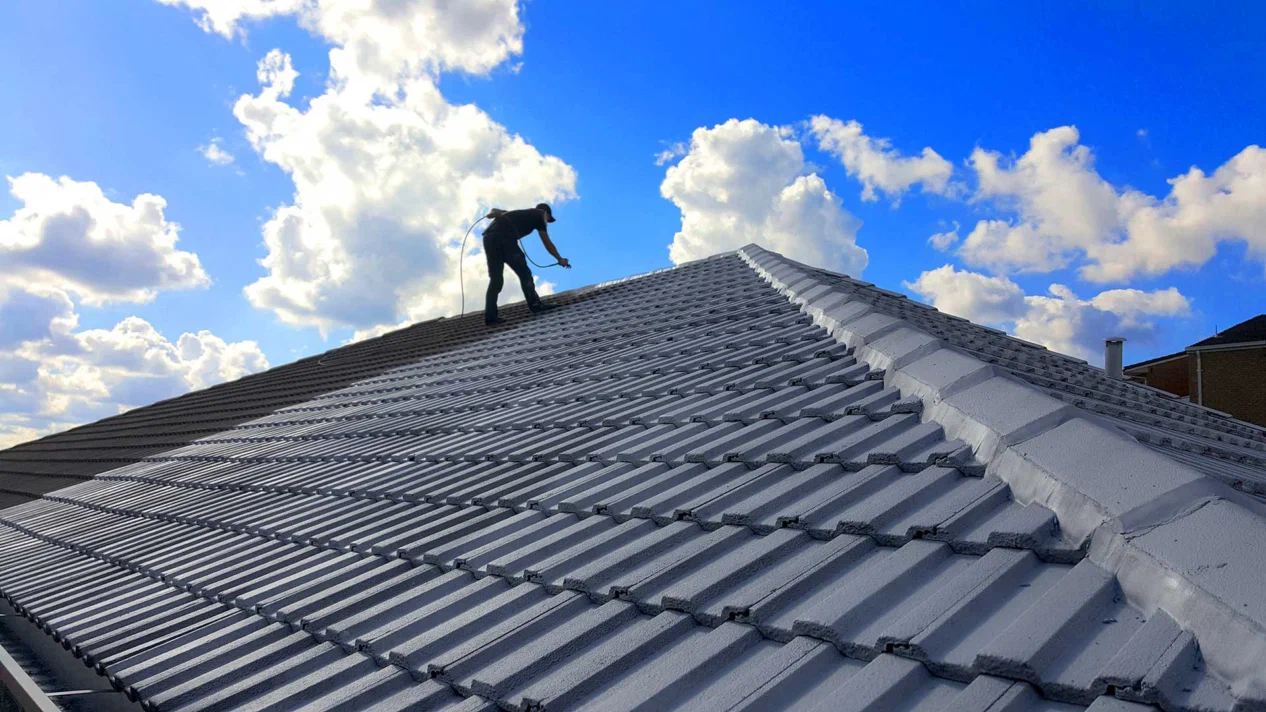
A missing shingle along the peak of your roof may not seem as concerning as a visible hole or a ceiling leak. However, the ridge is an important part of an asphalt shingle roofing system, and damage in this area can leave vulnerable roof components exposed to wind-driven rain. Damaged ridge cap shingles may crack, lift, shift out of position, or detach during storms, sometimes before homeowners notice any interior moisture.
Ridge cap shingles cover the joint where two sloping roof sections meet. Because they sit along an exposed part of the roof, their condition and attachment are important for maintaining the protective covering. When these components begin deteriorating, the key is determining whether the problem affects a few individual pieces or a larger section of the ridge.
For homeowners in Greentown, Hawley, Tafton, and the Lake Wallenpaupack area, recognizing ridge cap damage can help identify roofing problems after strong winds, seasonal temperature changes, and winter weather.
Not every cracked ridge cap requires a complete roof replacement. A small number of damaged pieces may be suitable for localized replacement, while extensive cracking or repeated detachment may indicate a broader installation or material problem. This guide explains the warning signs, likely causes, and repair decisions associated with damaged ridge cap shingles so homeowners can understand what deserves professional attention.
What Are Ridge Cap Shingles and Why Do They Matter?
Ridge cap shingles are protective roofing components installed along the uppermost joint where two sloping roof planes meet. Depending on the roof design, similar cap products may also cover hips, which are the raised diagonal intersections between roof sections.
Unlike regular field shingles installed across the broad surfaces of a roof, ridge caps are manufactured or prepared to follow the shape of the ridge. They overlap one another to create a weather-resistant covering along the joint.
Their performance depends on suitable materials, correct overlap, appropriate fastening, and compatibility with the underlying roof assembly.
How Ridge Cap Shingles Protect the Roof Peak
The ridge is a transition between two roof slopes. Although the surrounding shingles shed most rainfall down the roof surfaces, the joint at the peak requires its own protective covering.
Ridge caps bridge that transition and help direct precipitation away from vulnerable underlying components.
When individual caps detach or develop openings, the assembly may become less effective at resisting wind-driven rain.
Why Ridge Caps Can Deteriorate Differently From Regular Shingles
Ridge cap shingles follow a bend across the roof peak rather than lying flat on the roof surface.
Depending on the material, manufacturing method, and installation, this shape may place stress on portions of the shingle.
Ridge caps also experience wind exposure near the top of the roof, making proper attachment important.
Consequently, ridge cap shingle damage may occur even when the surrounding field shingles remain in acceptable condition.
7 Warning Signs of Damaged Ridge Cap Shingles
Recognizing the signs of damaged ridge cap shingles helps homeowners understand when the roof peak may require closer inspection. Some symptoms are visible from the ground, but the exact condition of the materials and fasteners generally requires professional evaluation.
1. Cracks Across the Ridge Cap Surface
Cracks are among the most recognizable indications of ridge cap deterioration.
Cracked ridge cap shingles may show splits near the bend of the roof peak, along their edges, or across the exposed surface.
Some surface marks are cosmetic, but a fracture extending through the shingle can compromise the protective covering.
The pattern matters. One cracked piece following physical damage is different from several consecutive caps developing similar fractures.
When cracking appears repeatedly along the ridge, the contractor should consider whether aging materials, unsuitable installation methods, or excessive stress contributed to the condition.
2. Missing Ridge Cap Shingles
A visible gap in the row of ridge cap shingles may indicate that one or more pieces have detached.
Strong winds can displace ridge caps when attachment or sealing is inadequate or has deteriorated.
Missing ridge cap shingles may leave underlying components more exposed to precipitation.
The severity depends on what remains beneath the missing pieces and whether nearby caps have also loosened.
Homeowners should arrange an assessment rather than assuming that installing one replacement shingle will address the entire problem.
3. Ridge Cap Shingles Lifting Along the Edges
Properly installed ridge caps should remain secured in their intended position.
Ridge cap shingles lifting at the exposed edges may indicate weakened adhesion, displaced fasteners, material deterioration, or wind damage.
Once an edge becomes raised, additional wind exposure may place greater stress on that section.
A slightly irregular appearance does not always indicate failure, but visible separation, movement, or repeated lifting deserves investigation.
4. Ridge Cap Pieces Sliding Out of Alignment
Ridge caps are installed in an overlapping sequence designed to maintain coverage along the peak.
When individual pieces shift, gaps or irregular overlaps may develop.
Homeowners might notice one cap sitting higher than its neighbors, a crooked section, or an unexpected opening along the ridge.
These changes may result from previous repairs, wind exposure, or inadequate fastening.
A professional should assess whether the displaced pieces still provide the intended coverage and attachment.
5. Exposed Fasteners Near the Roof Ridge
Fasteners are essential to keeping ridge caps securely attached.
When a cap cracks, shifts, or detaches, fastener heads may become visible in locations that were intended to remain covered.
Incorrect fastener placement can also affect the ridge cap assembly.
Exposed fasteners should be evaluated in relation to the specific ridge cap product and installation details.
This is different from diagnosing general roof nail pops beneath field shingles, because the concern here is whether the ridge cap attachment system remains secure and weather-resistant.
6. Broken Ridge Cap Fragments After a Storm
Shingle fragments found near the house after strong winds may indicate roofing material damage.
Pieces with a shape or bend consistent with ridge cap products can raise suspicion that material detached from the roof peak.
However, fragments alone cannot establish where the damage occurred.
If safe, homeowners can photograph or retain pieces found on the ground for a roofing professional to examine.
Avoid climbing onto the roof to locate the missing material.
7. Moisture Appearing Near the Upper Roof Assembly
Moisture stains near the upper attic or ceiling may indicate water intrusion requiring investigation.
A compromised ridge covering can be one possible source, especially when symptoms develop during wind-driven rain.
However, moisture appearing near the ridge does not automatically prove that damaged ridge cap shingles are responsible.
Water may travel along framing or other concealed surfaces before becoming visible indoors.
The actual entry point should be identified before repairs are selected.
What Causes Ridge Cap Shingles to Crack, Lift, or Detach?
The cause of ridge cap deterioration is important because replacing damaged pieces without correcting the underlying issue may allow the problem to return.
Wind Uplift and Storm Damage
Wind can create uplift forces along exposed roofing edges and surfaces.
If ridge cap shingles have inadequate attachment or weakened sealing, strong winds may lift their edges or detach individual pieces.
The damage may affect only a short section, or it may extend along a larger portion of the ridge.
The contractor should examine adjacent pieces because visible damage may not reveal every loosened section.
Aging and Loss of Material Flexibility
Asphalt roofing products can become less flexible as they age.
When material has become brittle, movement and stress may contribute to cracking.
Ridge caps that follow the bend of a roof peak may show fractures in stressed areas.
Age alone is not proof of failure, but widespread brittleness can influence whether individual repairs remain practical.
Improper Fastener Installation
Fastener type, length, placement, and penetration can affect the reliability of a ridge cap installation.
Fasteners that do not adequately engage the intended substrate or are positioned incorrectly may allow movement.
Overdriving or otherwise damaging the material during fastening can also compromise its condition.
The correct method depends on the exact roofing product, the roof assembly, and applicable installation requirements.
Incorrect Overlap or Product Selection
Ridge cap products have specific exposure and overlap requirements.
When the installation does not follow those requirements, portions of the assembly may become vulnerable to wind or water.
Using unsuitable material can also contribute to deterioration, particularly when a product is bent beyond its intended application.
Specialized ridge cap products should be installed according to the relevant manufacturer’s specifications.
Cold-Weather Handling
Asphalt-based shingles can be less flexible at low temperatures.
Improper bending or handling during cold-weather installation may increase the likelihood of cracking.
Some products also require special attention to sealing under colder conditions.
Contractors should follow the manufacturer’s cold-weather procedures rather than assume that every ridge cap can be installed in the same way throughout the year.
Problems With Previous Ridge Repairs
A repaired ridge may experience recurring problems if the original cause was not addressed.
Examples include unsuitable replacement materials, incorrect fastening, or incomplete correction of damaged neighboring pieces.
When similar damage returns in the same location, professional investigation should focus on the installation details rather than repeatedly replacing individual caps without further evaluation.
Can Damaged Ridge Cap Shingles Cause a Roof Leak?
Yes. Damaged ridge cap shingles may increase the possibility of water intrusion when cracks, missing material, or displaced overlaps compromise the intended protective covering.
However, a visible crack does not automatically mean water has entered the home.
The underlying roofing materials and the condition of the complete ridge assembly influence whether moisture reaches interior spaces.
How Water Can Enter Through a Damaged Ridge
Ridge caps help shed precipitation over the roof peak.
If the covering contains gaps or incorrectly positioned pieces, wind-driven rain may reach areas beneath the intended water-shedding layer.
The risk depends on the extent of the defect and how the surrounding components are installed.
A professional should evaluate the ridge assembly rather than assume that every visible opening has produced an active leak.
Why a Roof Ridge Cap Leak May Be Difficult to Locate
A suspected roof ridge cap leak may produce moisture symptoms some distance from the damaged section.
Once water enters the roof assembly, it can travel along framing, sheathing, or other materials before becoming visible.
For example, a homeowner might notice a stain near an upper ceiling, while the entry point is located elsewhere along the ridge or another roofing transition.
The relationship between rainfall, wind direction, and the appearance of moisture may help guide the investigation.
Does Every Crack Require Immediate Replacement?
Not necessarily. The contractor should determine whether the crack affects the shingle’s protective function, whether the piece remains securely attached, and whether neighboring materials are deteriorating.
A minor surface defect may require a different response from a fracture extending through the cap.
The repair decision should be based on the actual condition rather than appearance alone.
How to Check Ridge Cap Shingles Safely
Because ridge caps are located at elevated roof peaks, homeowners should avoid attempting direct inspection without appropriate equipment and training.
However, several observations can help a qualified contractor understand the problem.
Look for Changes Along the Ridge Line
From a safe ground-level location, check whether the ridge appears continuous and reasonably aligned.
Missing pieces, large gaps, or significant displacement may be visible on some roofs.
Complex roof designs and building height can make these conditions difficult to see.
Document Changes After Strong Winds
If loose material appears around the property or the ridge looks different after a storm, take photographs from safe locations.
Previous roof photographs may help establish whether a particular irregularity is new.
Look for Related Interior Moisture
If you notice new stains, document when they appear and whether they correspond with rainfall or strong winds.
These observations may help a contractor investigate the source.
However, do not assume the ridge is responsible simply because moisture appears near the upper ceiling.
Request a Professional Ridge Inspection
A qualified roofing contractor can examine the cap material, overlaps, fasteners, neighboring shingles, and relevant underlying components.
Wallenpaupack Roofers provides roof inspection and maintenance services for homeowners in Greentown, PA, and surrounding Lake Wallenpaupack communities.
The objective is to establish the cause and extent of damage before choosing a repair method.
Ridge Cap Shingle Repair vs. Replacement: Which Is Appropriate?
The correct ridge cap shingle repair depends on whether the damage is limited to a small number of pieces or affects a significant portion of the ridge.
A professional assessment should also determine whether the underlying installation remains suitable.
Example 1: Two Missing Ridge Caps After a Windstorm
Consider a relatively sound asphalt shingle roof that loses two ridge cap pieces during a storm.
If the surrounding caps remain secure, the underlying assembly is undamaged, and suitable replacement material is available, a localized repair may be appropriate.
The contractor should still investigate why the pieces detached.
For example, inadequate fastening may require correcting adjacent attachment details rather than replacing only the missing material.
Example 2: Cracks Across Most of the Ridge
Now consider a roof where numerous ridge caps have developed fractures along the same bend.
Replacing only the most visibly damaged pieces may not address widespread brittleness or unsuitable materials.
A longer section of the ridge may require replacement to restore reliable protection.
The scope should reflect the observed deterioration, not an assumption that the entire roof covering has failed.
Example 3: Lifted Ridge Caps Above an Existing Ridge Vent
If lifted caps are installed over a ridge vent, the inspection should evaluate both the covering and the ventilation component.
The vent may remain serviceable, or its attachment and surrounding details may also require correction.
Replacing the caps alone may not resolve a problem originating from the underlying assembly.
When Localized Repair Is Usually More Reasonable
Localized correction may be suitable when only a few caps are damaged, surrounding materials remain sound, and the original installation problem can be corrected.
For homeowners dealing with isolated ridge cap defects, Wallenpaupack Roofers provides professional roof repair services in Greentown and surrounding communities.
When Larger Ridge Cap Replacement May Be Necessary
Replacing a longer section may be more appropriate when cracking, detachment, or installation defects affect several neighboring pieces.
The objective is to restore the ridge covering without replacing otherwise serviceable roof areas unnecessarily.
Complete roof replacement should be considered separately and only when the overall roofing system’s condition justifies it.
What Happens During Professional Ridge Cap Shingle Repair?
Professional work begins with evaluating the damaged area and identifying the original cause.
The contractor checks the affected caps, adjacent material, attachment details, and any underlying components that may influence the repair.
Damaged or unsuitable pieces are then removed according to the agreed scope.
If the existing ridge vent or supporting materials are affected, those conditions must be addressed before completing the replacement covering.
Compatible ridge cap shingles are installed with the appropriate overlap, fastener arrangement, and weather-related procedures specified for the product.
The completed section should be checked for secure attachment, proper alignment, and continuity with the surrounding roofing materials.
The work should restore the intended protective detail rather than simply improve the visual appearance of the ridge.
Ridge Cap Shingles vs. Ridge Vents: Why the Difference Matters
Ridge caps and ridge vents may occupy the same roof area, but they serve different purposes.
Ridge cap shingles protect the roofing transition at the peak. A ridge vent, when present, provides an exhaust opening for ventilation in certain attic designs.
Some ridge vent systems are designed to receive compatible cap shingles over the ventilation component.
Other roof assemblies use different configurations.
When Only the Ridge Cap Is Damaged
A ridge cap can crack or become loose while the underlying ventilation component remains intact.
In this situation, the covering may need repair without requiring replacement of the vent.
The contractor should still confirm that the vent and adjacent details have not been compromised.
When the Ridge Vent Also Requires Attention
If the vent is loose, deteriorated, or incorrectly installed, the problem may extend beyond the shingle covering.
Additional correction may be needed to restore the intended assembly.
However, damaged ridge cap shingles do not automatically mean the attic ventilation system has failed.
For a more detailed explanation of ventilation design and roof airflow, see our guide to attic ventilation systems.
Why Applying Roof Sealant Is Not Always the Right Repair
Applying roofing cement or sealant over a crack may appear simpler than replacing a damaged ridge cap.
However, sealant does not necessarily restore the strength, attachment, or correct overlap of a deteriorated shingle.
Certain manufacturers permit specific compatible materials in limited situations, including particular cold-weather applications.
Those instructions should govern whether sealant is appropriate.
A severely cracked, detached, or incorrectly fastened ridge cap generally requires correction of the failed material or installation detail.
Using sealant without identifying the underlying problem may conceal damage while leaving the original weakness unresolved.
How to Help Prevent Ridge Cap Shingle Damage
Although severe weather cannot always be prevented from affecting a roof, correct installation and suitable maintenance can reduce avoidable problems.
Use Compatible Ridge Cap Products
Ridge caps should be appropriate for the roof covering and the intended ridge or hip application.
Purpose-made products may have specific requirements for fastening, exposure, and wind resistance.
Follow Manufacturer Instructions
Installation should follow the applicable product requirements for overlap, fasteners, orientation, and temperature conditions.
These details are especially important when the material must bend across the roof peak.
Investigate Repeated Damage
If caps repeatedly lift or crack in the same location, a contractor should evaluate the underlying installation rather than continue making identical repairs.
Repeated defects may indicate a problem that affects more than one individual piece.
Arrange Inspections After Significant Storms
Strong wind events may loosen roofing components even when they do not cause immediate interior water damage.
A professional inspection can help identify displaced caps and other visible defects.
Avoid Unsafe DIY Repairs
Ridge cap work often requires access to steep or elevated roof sections.
Homeowners should not attempt to lift shingles, replace caps, or apply sealants from an unsafe ladder or roof position.
Qualified roofing professionals should handle direct inspection and repair.
Damaged Ridge Cap Shingles in Greentown and Lake Wallenpaupack, PA
Homes in Greentown, Hawley, Tafton, Lakeville, and nearby Lake Wallenpaupack communities experience changing seasonal conditions, including rain, snow, freezing temperatures, and strong winds.
These conditions make the reliability of exposed roofing details particularly important.
Wind events may reveal loose attachment, while colder weather can affect the flexibility of certain asphalt-based roofing products.
However, local weather alone does not establish why a ridge cap has failed.
The condition of the material, fastening, installation history, and surrounding roofing components should determine the appropriate corrective work.
For Northeast Pennsylvania homeowners, identifying damaged ridge cap shingles early can help distinguish isolated repair needs from deterioration affecting a larger section of the roof peak.
Cracked or Missing Ridge Cap Shingles? Contact Wallenpaupack Roofers
Cracked, loose, or missing ridge caps can compromise an important protective detail along the roof peak.
However, the visible damage does not automatically mean your entire roof requires replacement.
Wallenpaupack Roofers provides residential roofing services in Greentown, PA, and nearby Lake Wallenpaupack communities, including roofing inspections and repairs.
If you have noticed displaced ridge cap pieces, repeated cracking, or roofing fragments after a storm, our team can help assess the condition of the affected area and discuss suitable next steps.
The objective is to identify the extent of the damage and determine whether localized repair or replacement of a longer ridge section is appropriate.
Call (570) 390-3166 or contact Wallenpaupack Roofers to request a professional roof assessment. Tell us what you have noticed and whether the problem appeared after a recent storm.
Frequently Asked Questions About Damaged Ridge Cap Shingles
What are the most common signs of damaged ridge cap shingles?
Common signs include cracking, missing pieces, lifting edges, displaced overlaps, exposed fasteners, and loose roofing fragments. These conditions may indicate that the ridge covering requires professional assessment.
Can cracked ridge cap shingles cause roof leaks?
Yes. Significant cracks or openings may allow wind-driven rain to reach vulnerable underlying areas. However, not every cracked cap causes an active leak.
Why are ridge cap shingles lifting after strong winds?
Wind exposure may lift ridge caps when their sealing or attachment is inadequate or deteriorated. The contractor should examine fasteners, neighboring pieces, and the condition of the material.
Can missing ridge cap shingles be replaced individually?
Sometimes. Localized replacement may be appropriate when nearby caps remain sound and suitable replacement materials are available. The cause of detachment should also be addressed.
How do I know if ridge cap shingle repair is enough?
A small number of damaged caps on an otherwise sound ridge may be suitable for localized repair. Widespread cracking, repeated detachment, or installation defects may require replacing a longer section.
Is ridge cap damage different from regular shingle damage?
Yes. Ridge caps cover the joint at the roof peak and have different positioning and installation requirements from field shingles. Their condition should be evaluated in relation to the ridge assembly.
Can damaged ridge cap shingles affect a ridge vent?
They can leave the area above a ridge vent more exposed, depending on the assembly. However, a damaged cap does not automatically mean the ventilation component has failed.
Should I replace the entire roof if several ridge caps are cracked?
Not necessarily. Several damaged ridge caps may require replacement of part or all of the ridge covering without requiring complete roof replacement. The decision depends on the condition of the overall roofing system.
Who should I contact for ridge cap shingle repair in Greentown, PA?
A qualified roofing contractor can inspect the damaged ridge and determine whether localized repair or more extensive work is necessary. Wallenpaupack Roofers provides roofing services in Greentown and surrounding Northeast Pennsylvania communities.