
Finding small, sand-like particles in your gutters or noticing dark patches on your roof shingles can be concerning. You might wonder whether your roof is simply aging or whether the protective surface is beginning to fail. This condition, known as asphalt shingle granule loss, occurs when the mineral granules embedded in the shingle surface become detached, exposing varying amounts of the asphalt coating underneath.
Some granule shedding is normal, especially shortly after a new roof is installed. However, concentrated bare spots, unusually heavy shedding, or noticeable changes in the shingle surface may indicate damage that deserves professional attention.
For homeowners in Greentown, Hawley, Tafton, and the Lake Wallenpaupack area, recognizing the difference between normal granule shedding and deterioration can help prevent unnecessary roofing work while identifying problems before they become more serious.
The key is not simply how many granules appear in the gutters. Their distribution, the condition of the exposed shingle surface, and whether the shedding is increasing over time provide more useful information.
What Is Asphalt Shingle Granule Loss?
Asphalt shingles contain mineral granules embedded into their upper asphalt coating during manufacturing. These particles create the textured appearance commonly seen on residential roofs and provide important protection against environmental exposure.
Asphalt shingle granule loss occurs when some of those particles separate from the surface and are carried away by rainfall, wind, handling, or other physical forces.
A small amount of shedding may have little effect on the condition of the shingle. However, substantial granule loss can leave the underlying asphalt more exposed to sunlight and weathering.
The importance of the condition depends on whether the granules are simply loose manufacturing residue or whether the protective surface of the installed shingle is deteriorating.
Why Are Granules Important on Asphalt Shingles?
Mineral granules serve several important functions.
UV Protection: Granules help shield the asphalt coating from direct ultraviolet exposure. Without sufficient coverage, exposed asphalt may deteriorate faster under sunlight.
Surface Protection: The mineral layer provides a protective surface that helps reduce direct environmental exposure of the asphalt coating.
Color and Appearance: Different granule blends create the colors and textures available in asphalt roofing products.
Product Performance: The granule layer is an integral part of how many asphalt shingles are manufactured to perform during their intended service life.
This is why extensive granule loss deserves attention, even when the affected shingles have not developed an obvious leak.
Is Asphalt Shingle Granule Loss Normal?
Yes. Some granule shedding is expected, particularly when asphalt shingles are relatively new.
During manufacturing, additional loose granules may remain on the shingle surface. These particles are sometimes described as surplus or rider granules.
Rainfall gradually washes them away, and they may collect in gutters and downspouts.
According to GAF’s technical guidance on granule loss in new shingles, this initial shedding commonly decreases over time and does not necessarily indicate a manufacturing defect.
The difference between normal shedding and problematic loss becomes clearer when the condition of the actual shingle surface is considered.
Normal Granule Shedding on New Shingles
Granule shedding may be consistent with normal behavior when the roof was recently installed, the exposed shingle surfaces retain generally uniform coverage, and the amount of loose material gradually decreases.
For example, a homeowner might notice a collection of dark particles near a downspout after the first few rainstorms following installation.
If the installed shingles remain fully covered and show no concerning surface damage, those loose particles may simply be excess manufacturing granules.
When Granule Loss Becomes Excessive
Excessive shingle granule loss becomes more concerning when visible patches of the protective surface are missing, granule coverage becomes noticeably uneven, or the amount of shedding increases rather than decreases.
The condition may also be more significant when associated with cracked, brittle, or physically damaged shingles.
There is no universal amount of material in a gutter that proves a roof is failing. A professional assessment should consider the condition of the shingles themselves rather than relying on particle quantity alone.
6 Warning Signs of Excessive Asphalt Shingle Granule Loss
Recognizing the difference between normal surface shedding and meaningful deterioration is especially important when homeowners notice shingles losing granules.
1. Bald Spots on Roof Shingles
One of the clearest warning signs is the appearance of areas where mineral granules have detached and the underlying asphalt coating is visible.
These bald spots on roof shingles may appear darker or smoother than the surrounding granulated surface.
A localized bare area can indicate physical abrasion, impact-related damage, or deterioration of the granule coating.
The severity depends on the size of the affected area, how much asphalt is exposed, and whether the surrounding material remains intact.
2. Unusually Large Amounts of Granules in Gutters
Finding granules in gutters does not automatically mean the roof is damaged.
However, a noticeable increase in the amount of material collecting at downspouts or inside gutters may deserve investigation, especially on an established roof that previously showed limited shedding.
The timing matters. Granule accumulation immediately after installation should be evaluated differently from a sudden increase several years later.
Rather than judging the problem by a single collection of particles, look for a developing pattern and any corresponding changes in the roof surface.
3. Uneven Color or Surface Texture
Asphalt shingles generally have a consistent granulated appearance within their intended color variation.
Areas that become unexpectedly dark, smooth, or patchy may indicate uneven granule retention.
Not every color difference represents damage. Shadows, lighting conditions, algae, manufacturing variation, and previous repairs can also affect appearance.
An inspection can help determine whether the difference involves missing mineral coverage or another surface condition.
4. Exposed Asphalt on Multiple Shingles
When several shingles show significant exposed asphalt, the condition may be more extensive than an isolated surface defect.
Loss of protective mineral coverage can allow greater ultraviolet exposure to the affected asphalt.
A professional should evaluate whether the material remains serviceable and whether the pattern suggests localized damage or broader surface deterioration.
5. Granule Loss Following Physical Impact
Granules may detach when shingles experience impacts or unusual mechanical forces.
The affected surface may show a concentrated area of missing granules rather than gradual, relatively uniform wear.
However, isolated granule loss does not by itself establish that a shingle has suffered functional impact damage.
The surrounding material and any deformation or fractures must also be assessed.
6. Granule Loss Combined With Shingle Cracking
Shingles showing significant granule loss together with cracking, surface splits, or brittleness deserve closer evaluation.
These combined symptoms can indicate that the roofing material is experiencing more than ordinary loose-granule shedding.
The presence of several deterioration symptoms is generally more informative than a small amount of granule loss alone.
What Causes Asphalt Shingles to Lose Granules?
Understanding the causes of asphalt shingle granule loss helps homeowners determine whether the condition is expected, related to physical damage, or associated with aging.
Loose Granules Left From Manufacturing
During production, not every mineral granule applied to a shingle becomes permanently embedded in the asphalt coating.
Some surplus particles remain on the finished surface and may be released during handling, installation, or early rainfall.
This type of shedding is particularly relevant to newly installed roofing materials and does not automatically indicate defective shingles.
Gradual Surface Weathering
Over time, asphalt shingles experience sunlight, rainfall, temperature changes, and other environmental conditions.
These exposures can contribute to changes in the protective surface and the adhesion of granules.
As the material ages, some gradual surface shedding may occur.
The rate varies according to shingle type, roof exposure, installation conditions, and the characteristics of the roofing product.
Foot Traffic and Physical Abrasion
Walking on roofing shingles can dislodge granules, particularly when the surface is exposed to unnecessary friction.
Dragging equipment across the roof or carrying out work without protecting surrounding materials may also cause localized abrasion.
The resulting damage can appear concentrated in areas where workers or equipment contacted the roof surface.
Hail and Other Physical Impacts
Hailstones or falling objects can sometimes disturb the granule layer.
When assessing granule loss after storm conditions, it is important to distinguish actual impact damage from preexisting surface wear.
Missing granules alone do not confirm hail damage. A qualified roofing professional may look for additional evidence, including changes in the shingle’s structure or surface.
Long-Term Asphalt Shingle Deterioration
As roofing materials age, their physical properties can change.
Asphalt shingle deterioration may involve granule loss alongside cracking, increased stiffness, or other forms of surface degradation.
However, shingle age alone is not enough to establish that the roof is no longer serviceable.
The decision should be based on the actual material condition and whether its ability to perform as intended has been compromised.
Granules in Gutters: When Should Homeowners Be Concerned?
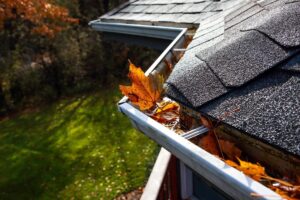
Discovering roofing granules inside a gutter is often the first reason a homeowner begins examining their shingles.
The most useful approach is to consider the timing, amount, and associated roof conditions.
Granules From a Recently Installed Roof
If the roof was installed recently and remains visibly intact, some loose granules may be manufacturing residue.
The amount should generally diminish as excess particles are washed away.
Increasing Granule Accumulation on an Older Roof
If a roof begins producing noticeably more loose granules than it did previously, the change may deserve closer attention.
Look for corresponding signs of exposed asphalt, unusual surface patches, or damaged shingles.
Granules Accompanied by Dark Roof Patches
When granules in gutters are accompanied by visible bald areas, the condition is more concerning than loose particles alone.
The exposed shingle surfaces should be evaluated to determine whether the protective coating has been compromised.
Granules Appearing After Severe Weather
An increase after strong weather may reflect physical disturbance, existing surface wear, or another condition.
The timing can justify closer examination, but it does not establish the cause without additional evidence.
A Simple Comparison of Common Granule Loss Patterns
| What You Notice | Possible Explanation | Recommended Next Step |
| Small amounts after roof installation | Loose manufacturing granules | Monitor whether shedding decreases |
| Occasional granules with uniform shingle coverage | Normal surface shedding | Continue routine observation |
| Sudden increase on an established roof | Surface wear or physical disturbance | Check for accompanying symptoms |
| Dark patches with missing granules | Localized protective surface loss | Request professional assessment |
| Granule accumulation with cracked shingles | Possible material deterioration | Arrange roof inspection |
| Concentrated surface loss following impact | Possible physical damage | Evaluate affected shingle condition |
| The amount of granules is only one part of the assessment. The condition of the roofing surface provides essential additional information. | ||
| Homeowners should not climb onto a roof or use unsafe ladders to collect granules. Roof surfaces can be slippery, and unnecessary foot traffic may cause further damage. |
Can Asphalt Shingle Granule Loss Cause Roof Leaks?
Not every instance of granule loss results in a roof leak.
Mineral granules form part of the protective surface, but losing a small amount does not necessarily create an opening through the entire shingle.
A roof may continue shedding water effectively when its asphalt coating and other components remain intact.
However, substantial loss can leave areas of asphalt more exposed to sunlight and weathering, potentially contributing to accelerated deterioration.
If a roof already has cracks, punctures, or other defects, water intrusion may become a separate concern.
Why Exposed Asphalt Matters
The mineral layer helps protect the underlying asphalt from direct sunlight.
When enough granules detach to expose a significant area, the asphalt becomes more vulnerable to environmental exposure.
This does not mean a leak will immediately develop, but it can affect the material’s long-term condition.
Granule Loss Is Not the Same as a Roof Leak
Water stains inside a house should not automatically be attributed to visible granule loss.
Leakage can originate from other roofing components and may require separate investigation.
A professional should establish the actual water-entry point before recommending repairs.
Can You Repair Asphalt Shingles That Have Lost Granules?
The appropriate response depends on how much of the protective surface is missing and whether the shingles remain serviceable.
Can Missing Granules Be Reattached?
Once granules have detached, they generally cannot be restored to their original factory-embedded condition through ordinary maintenance.
Applying loose granules, adhesive products, or coatings is not a universal method for restoring the original performance of a damaged asphalt shingle.
A repair should follow the relevant manufacturer’s recommendations rather than relying on cosmetic surface coverage.
When Monitoring May Be Appropriate
If the roof shows limited granule shedding but retains a generally uniform protective surface, continued observation may be sufficient.
Monitoring becomes especially useful when a recently installed roof is releasing excess granules without visible material damage.
If shedding increases or the surface develops bare areas, the condition should be reassessed.
When Individual Shingles May Need Replacement
If concentrated granule loss has significantly damaged individual shingles, localized replacement may be an option.
The contractor must consider the condition of adjacent shingles and whether the affected materials can be removed and replaced without damaging the surrounding roofing system.
For localized shingle damage requiring corrective work, Wallenpaupack Roofers provides professional roof repair services in Greentown, PA.
When Widespread Granule Loss Requires Further Evaluation
Extensive loss across multiple roof areas may indicate broader material deterioration.
However, widespread surface changes do not automatically establish that the entire roof needs replacement.
A qualified roofing professional should assess granule coverage, asphalt exposure, shingle condition, and relevant installation details before recommending the scope of work.
How to Check Asphalt Shingle Granule Loss Safely
Homeowners can gather useful information about potential granule loss without walking on the roof.
Observe the Roof From the Ground
Look for unusual dark areas, obvious bald patches, or inconsistent surface coverage.
Photographs taken from a safe position may help document areas that appear different from surrounding shingles.
Compare Gutter Debris Over Time
If you have safely accessible observations from routine gutter maintenance, note whether the amount of loose material appears to be increasing.
A one-time collection is less informative than a consistent pattern.
Consider the Roof’s Installation History
A relatively new roof may shed surplus granules, while an older roof may develop wear related to longer-term exposure.
Knowing when the shingles were installed helps provide context, but age alone cannot determine whether they are damaged.
Document Changes After Severe Weather
If unusual surface changes appear after a weather event, take photographs from a safe location and record when the changes were first noticed.
This can provide useful context for a professional inspection without assuming the weather event caused the damage.
Request a Professional Roof Inspection
A roofing professional can examine the shingle surface, determine whether asphalt is exposed, and assess the extent and distribution of missing granules.
A professional roof inspection and maintenance service can help distinguish ordinary granule shedding from material deterioration that may require attention.
How to Reduce Unnecessary Granule Loss
Although normal weathering cannot be completely prevented, homeowners can avoid activities that unnecessarily damage the granulated surface.
Avoid Unnecessary Roof Foot Traffic
Walking on asphalt shingles can cause mechanical abrasion and dislodge granules.
Roof access should be limited to appropriately qualified personnel using suitable safety procedures.
Avoid Aggressive Roof Cleaning
High-pressure washing and abrasive cleaning methods can damage the protective granule surface.
Cleaning methods should be appropriate for the roofing product and consistent with manufacturer recommendations.
Keep Drainage Systems Functional
Maintaining clear gutters and downspouts supports normal drainage and makes it easier to notice unusual accumulations of roofing particles.
Gutter maintenance does not prevent normal granule shedding, but it can help homeowners observe changes over time.
Address Localized Material Damage Promptly
If shingles show significant exposed asphalt, unusual abrasion, or other visible damage, professional assessment can help determine whether corrective work is needed.
Follow Manufacturer Maintenance Recommendations
Roofing products can have different maintenance and installation requirements.
When questions arise about the condition of a specific shingle, manufacturer documentation can help guide the assessment.
Asphalt Shingle Granule Loss in Greentown and Lake Wallenpaupack, PA
Homes around Greentown, Hawley, Tafton, Lakeville, and the Lake Wallenpaupack area experience seasonal temperature changes, rainfall, snow, and occasional severe weather.
These conditions expose asphalt roofing materials to a range of environmental stresses during their service life.
However, local weather should not automatically be blamed whenever granules appear in a gutter.
A newly installed roof may shed excess manufacturing particles, while an established roof may develop surface wear or localized damage for different reasons.
For Northeast Pennsylvania homeowners, the most useful approach is to examine how the granule loss is distributed, whether asphalt has become exposed, and whether the condition is changing.
A focused evaluation of the affected shingles can help determine whether the roof needs monitoring, localized repair, or further professional assessment.
Noticing Excessive Granules in Your Gutters? Contact Wallenpaupack Roofers
Finding loose roofing granules does not automatically mean your roof is failing. However, noticeable bald patches, increasing granule accumulation, or changes in the shingle surface deserve professional attention.
Wallenpaupack Roofers provides roofing inspection and maintenance services for homeowners in Greentown, PA, and surrounding Lake Wallenpaupack communities.
Our team can evaluate visible shingle wear, assess areas of missing granule coverage, and help determine whether your roof needs continued monitoring or corrective work.
If you are concerned about asphalt shingle granule loss, identifying the condition of the roofing materials is the first step toward making an informed decision.
Call (570) 390-3166 or schedule a professional roof inspection with Wallenpaupack Roofers to discuss your roofing concerns.
Frequently Asked Questions About Asphalt Shingle Granule Loss
Is asphalt shingle granule loss normal on a new roof?
Yes. Newly installed shingles may release excess manufacturing granules during the first months after installation. This generally decreases over time and does not automatically indicate damaged roofing materials.
Why are my shingles losing granules?
Shingles losing granules may be associated with normal manufacturing residue, gradual surface weathering, abrasion, physical impact, or material deterioration. The pattern of loss helps determine whether it is concerning.
How much granule loss is too much?
There is no universal quantity that defines excessive loss. Visible bald areas, exposed asphalt, increasing shedding, and accompanying shingle damage are more useful warning signs than the number of granules in a gutter.
Are granules in gutters a sign that I need a new roof?
Not necessarily. Granules in gutters can be normal, especially after installation. The condition of the installed shingles must be evaluated before deciding whether repairs or more extensive work are needed.
Does granule loss after storm conditions always mean hail damage?
No. Granule loss after storm conditions may be associated with physical impacts, previous wear, or other causes. Additional evidence is needed before concluding that hail damaged the shingles.
Can bald spots on roof shingles be repaired?
The appropriate approach depends on the extent of surface damage. Some isolated damaged shingles may be replaced, but missing granules generally cannot be restored to their original factory-embedded condition through a simple surface patch.
Can asphalt shingle deterioration cause water leaks?
Significant deterioration can eventually compromise roofing materials, but granule loss alone does not automatically create a leak. Any active water intrusion should be diagnosed separately.
When should I schedule a roof inspection for granule loss?
Consider professional inspection when the granule loss is increasing, exposed asphalt is visible, several shingles show concentrated bare patches, or additional signs of roofing deterioration appear.