Choosing the Best Roofing Materials for Pennsylvania Homes requires more than comparing colors, warranties, or the price printed on a product brochure A roof in Pennsylvania may need to perform through summer heat, heavy rain, strong winds, freezing temperatures, snow, ice, falling branches, and repeated seasonal temperature changes
That makes the decision highly property-specific
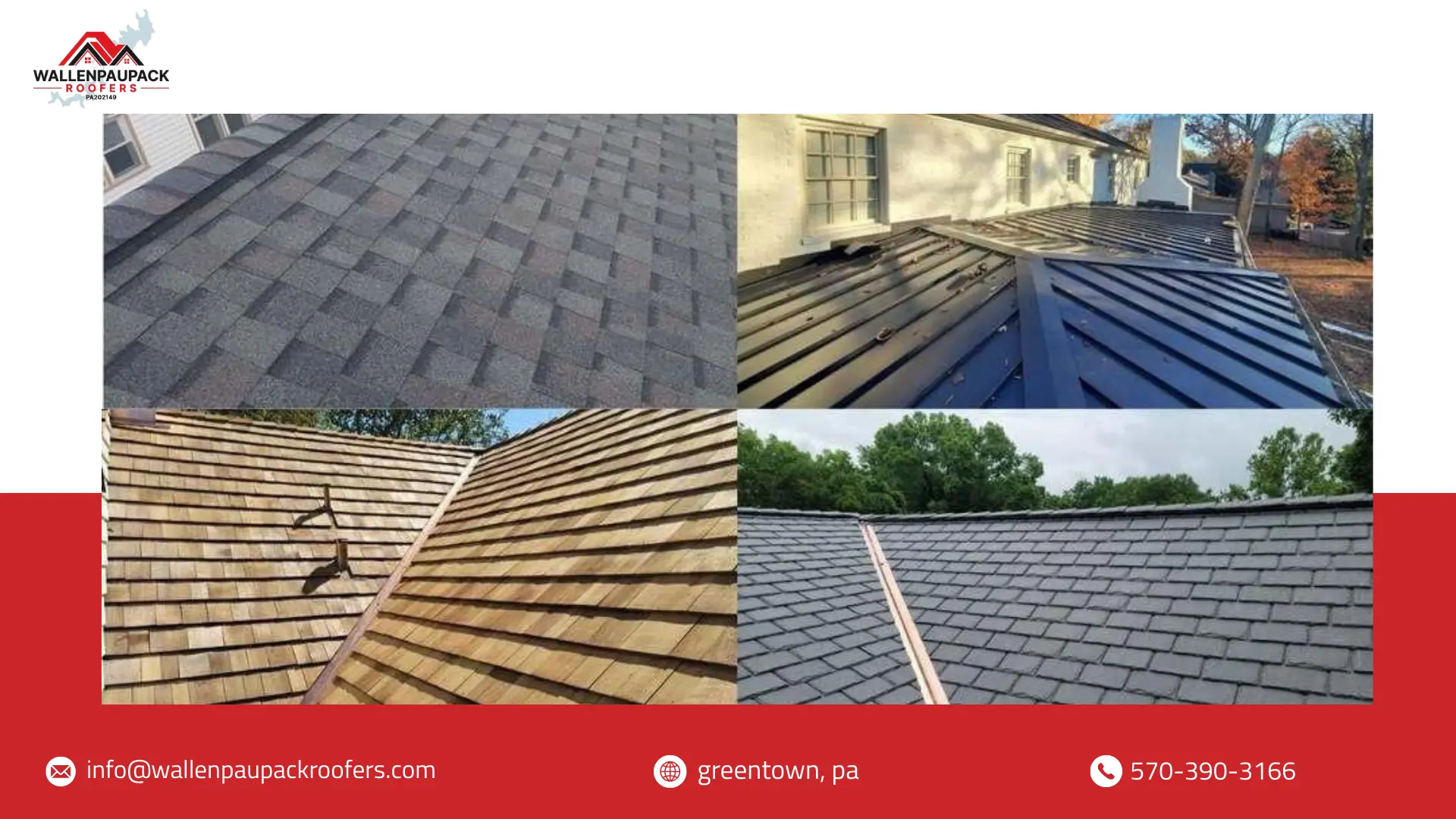
Architectural asphalt shingles may be the most practical option for one homeowner, while metal roofing may make more sense for someone planning to keep the property for decades Natural slate may suit a historic or premium home, while composite materials can offer a specialized appearance without some of the weight associated with natural stone
The best choice also depends on what is happening underneath the visible roofing surface Decking condition, underlayment, flashing, ventilation, drainage, roof slope, and installation quality can influence performance regardless of which material you select
For homeowners in Hawley, Greentown, Lake Wallenpaupack, Wayne County, and surrounding Northeast Pennsylvania communities, this guide compares the major roofing options from a practical perspective: cost, winter conditions, repairability, appearance, maintenance, storm exposure, and long-term ownership
There Is No Single Best Roofing Material for Every Pennsylvania Home
It is tempting to rank roofing materials from best to worst
That approach is usually too simplistic
Consider two Pennsylvania homeowners
The first owns a modest residential property and expects to move within ten years Keeping the initial project cost reasonable and making future localized repairs easy may be the biggest priorities
The second plans to remain in a lake-area property for several decades and is willing to invest more upfront for a particular architectural style and long-term roofing system
Those homeowners may reasonably choose different materials even if their houses are only a few miles apart
When considering the Best Roofing Materials for Pennsylvania Homes, start by defining what “best” actually means for your property
It might mean:
- Lower upfront cost
- Long-term ownership value
- Easier future repairs
- Strong winter performance
- Architectural appearance
- Lower maintenance expectations
- Material availability
- Compatibility with an existing structure
- Better suitability for a complicated roof design
The correct material is the one that provides the best balance for your priorities and your roof
The Pennsylvania Roofing Decision at a Glance
The following comparison provides a useful starting point before looking at each option in more detail
| Priority | Material Often Worth Comparing |
| Lower initial investment | Architectural asphalt shingles |
| Common residential appearance | Asphalt shingles |
| Long-term ownership | Metal roofing |
| Snow-shedding characteristics | Metal roofing |
| Premium or historic appearance | Natural slate |
| Slate-style appearance with different weight characteristics | Composite or synthetic roofing |
| Common future repair materials | Asphalt shingles |
| Specialty architectural design | Slate, metal, selected composites |
| Low-slope roof sections | Appropriate low-slope roofing membrane/system |
This table is not a final recommendation
A material may appear ideal on paper but become inappropriate once roof slope, structure, flashing complexity, or existing deck condition is considered
If the condition of the existing roof is uncertain, a professional roof inspection and maintenance assessment can identify problems that should influence material selection
Architectural Asphalt Shingles — The Practical Choice for Many Homes
Architectural asphalt shingles remain a common choice because they offer a useful balance between cost, appearance, availability, and repairability
They are available in a broad range of colors and profiles and can work with many residential architectural styles
For homeowners evaluating the Best Roofing Materials for Pennsylvania Homes primarily through a budget and practicality lens, asphalt shingles deserve serious consideration
Why Homeowners Choose Them
Architectural shingles may appeal to homeowners who want:
- A moderate initial project cost
- Familiar residential appearance
- Broad product availability
- Numerous color options
- Straightforward localized repairs
- A roofing system familiar to many residential contractors
Another advantage is that commonly distributed shingles may be easier to source later if a limited section needs repair
That does not guarantee an exact color match years later, but broad product availability can be useful
Where Asphalt Requires Careful Evaluation
The roofing system includes more than shingles
Ask about:
- Underlayment
- Starter shingles
- Ridge materials
- Ice-and-water protection
- Flashing
- Ventilation
- Valleys
- Fastening requirements
Cold-weather installation also needs to follow manufacturer requirements Asphalt shingles and factory-applied sealing strips can behave differently during colder conditions, so installation timing and procedures matter
The Asphalt Roofing Manufacturers Association provides specific guidance for cold-weather shingle installation, making it a useful non-commercial reference when comparing products and installation requirements
Metal Roofing — Strong Long-Term Potential With Different Tradeoffs
Metal roofing attracts homeowners for very different reasons than asphalt
Some choose it because of the appearance Others are interested in long-term ownership, snow shedding, or the reduced number of individual roof-covering pieces compared with shingle systems
Metal roofing can include:
- Standing seam
- Metal shingles
- Exposed-fastener panels
- Specialty profiles
These systems should not be treated as interchangeable
A standing-seam system and an exposed-fastener panel roof can differ significantly in detailing, maintenance, installation method, and cost
When Metal Roofing Can Make Sense
Metal may be particularly attractive when:
- You plan to own the home long term
- You prefer a metal architectural style
- Snow shedding is an important consideration
- You are willing to accept a higher initial investment
- Your roof design is appropriate for the selected system
Metal can be among the Best Roofing Materials for Pennsylvania Homes, but it is not automatically the best option for every roof
Think About What Happens Below the Eaves
Metal roofing can release accumulated snow more readily than some textured roofing materials
That can be useful on certain roof designs, but it also creates a design question
Where will the snow go?
Entrances, walkways, decks, driveways, HVAC equipment, landscaping, and other areas below the roof may need to be considered
Snow-retention systems may be appropriate in some locations
This is why the best roof material for snow should never be selected by considering the roof surface alone
Asphalt Shingles vs Metal Roofing
The asphalt shingles vs metal roofing comparison deserves its own discussion because these are often the two options Pennsylvania homeowners consider most seriously
Choose Asphalt Based on Practicality
Asphalt may be the stronger candidate when you prioritize:
- Lower initial cost
- Familiar appearance
- Common repair materials
- Broad contractor familiarity
- Easier integration with many traditional homes
Consider Metal for a Different Ownership Strategy
Metal may become more attractive when you prioritize:
- Long-term ownership
- Distinctive appearance
- Snow-shedding characteristics
- A particular standing-seam design
- A willingness to invest more upfront
But the material price is only part of the decision
A complicated roof with dormers, valleys, skylights, chimneys, and multiple transitions can increase detailing requirements dramatically
The better asphalt shingles vs metal roofing comparison is therefore not:
“Which product costs less?”
It is:
“Which complete installed system makes more sense for this particular property?”
If the existing roof is failing and replacement is already being considered, professional roof replacement planning can evaluate both the surface material and the supporting roof system
Natural Slate — A Specialized Choice Rather Than a Universal Upgrade
Natural slate occupies a different category
Its appeal is often architectural rather than purely practical
Slate can be particularly appropriate for:
- Historic properties
- Premium residences
- Buildings where the roof defines the architecture
- Long-term ownership
- Homeowners comfortable with specialized maintenance and repair
However, the weight of slate means structural suitability must be evaluated
Not every house should receive a slate roof simply because the homeowner likes the appearance
The roof structure, deck, slope, flashing, installer experience, and future repair access all matter
For the right building, slate may be among the Best Roofing Materials for Pennsylvania Homes
For another property, it could add complexity that provides little practical benefit
Composite and Synthetic Roofing — Appearance With a Different Material Strategy
Composite and synthetic products can reproduce the appearance of:
- Slate
- Wood shake
- Other premium roofing styles
These materials can appeal to homeowners seeking a specialized look without using the natural material being replicated
However, “composite roofing” is a broad category
Two synthetic products can differ substantially in:
- Composition
- Weight
- Installation requirements
- Warranty
- Impact testing
- Roof-slope requirements
- Available colors and profiles
Before choosing one, request the exact product information
A sample board is not enough
Ask what will happen if a section needs repair in ten years
Will the profile still be available?
Can a reasonably compatible product be sourced?
Future repairability should be part of the original roofing material comparison, not something considered only after damage occurs
What About Wood Shakes and Wood Shingles?
Wood roofing can create a distinctive appearance, but it introduces a different set of considerations
Homeowners should review:
- Maintenance
- Moisture exposure
- Tree coverage
- Fire classifications
- Local requirements
- Product treatment
- Installation expertise
- Long-term repair availability
For certain architectural projects, wood may be appropriate
For many typical Pennsylvania homes, however, asphalt shingles, metal roofing, slate, or composite products may offer a more practical combination of availability and maintenance
The goal of this article is not to declare wood roofing “bad”
It is to recognize that specialized materials should be chosen for a clear reason
Which Material Fits Your Priorities?
This is where roofing material selection becomes more useful
Instead of asking which product wins overall, match the options to what matters most to you
If Keeping the Initial Cost Lower Matters Most
Architectural asphalt shingles are usually one of the first options worth comparing
They are widely available and work well with many residential roof designs
But compare complete installed cost
A low shingle price means little if the project requires extensive deck replacement, flashing repairs, ventilation changes, or structural work
If You Plan to Own the Home for Decades
Metal, slate, premium shingles, and selected composite systems may deserve closer comparison
Long-term homeowners can justify a different investment strategy because initial cost is being considered across a longer ownership period
If Future Repairs Matter
Ask whether the material is widely distributed and whether your contractor expects replacement pieces to remain reasonably accessible
Mainstream architectural shingles often perform well in this category
Specialty products may require more planning
If Appearance Is the Main Priority
Slate, standing-seam metal, premium architectural shingles, and composite systems each create distinct architectural effects
Choose the appearance only after confirming structural and technical compatibility
If Winter Performance Is Your Biggest Concern
Do not choose by surface material alone
Evaluate:
- Roof slope
- Underlayment
- Flashing
- Attic conditions
- Drainage
- Snow retention
- Eave design
- Ice-and-water protection
Roofing materials for Pennsylvania weather work as part of systems
What Is the Best Roof Material for Snow?
This is one of the most common roofing questions in cold-weather regions
There is no single material that wins every snowy-roof comparison
Metal Roofing
Metal can shed snow effectively because of its smoother surface
However, rapid snow release can create hazards below the roof
Asphalt Shingles
Asphalt shingles can perform successfully in snowy climates when the complete system is properly installed and appropriate cold-climate details are used
Slate
Slate can also perform well in cold environments when structural conditions and installation are appropriate
The best roof material for snow depends on:
- Roof pitch
- Snow-retention strategy
- Structure
- Underlayment
- Flashing
- Insulation
- Ventilation
- Drainage
If winter readiness is one of your main concerns, use the site’s Winter Roofing Checklist to evaluate the rest of the roofing system alongside material selection
Roofing Materials for Pennsylvania Weather Need More Than Winter Performance
Pennsylvania weather is not just snow
A roofing system can experience:
- Heavy rain
- Wind
- Summer heat
- Falling branches
- Freeze-thaw cycles
- Snow
- Ice
- Rapid seasonal temperature changes
That changes the way homeowners should think about material selection
For example, a roof surrounded by large trees may need more attention to falling debris and moisture retention
An exposed property may experience stronger wind
A house with several valleys may have more complicated drainage
A roof covering cannot solve underlying design or installation problems
Even the Best Roofing Materials for Pennsylvania Homes can perform poorly over:
- Damaged decking
- Inadequate flashing
- Poorly detailed valleys
- Blocked ventilation
- Incorrect underlayment
- Drainage problems
The material and the supporting system need to work together
Storm Exposure and Impact Resistance
Some homeowners specifically look for impact-resistant roofing products
That can be a useful comparison factor
However, impact-resistant does not mean storm-proof
Actual damage depends on variables such as:
- Impact size
- Wind speed
- Roof angle
- Material condition
- Installation quality
- Age
If impact resistance matters to you, ask for the specific product classification rather than relying on generic marketing language
Review:
- Product name
- Manufacturer
- Test classification
- Warranty terms
- Installation requirements
If a roof has already been affected by severe weather, professional storm damage repair can determine whether the damage is limited or whether a broader roofing project should be considered
Roof Color and Energy Performance
Homeowners often ask whether choosing a light-colored roof will significantly lower energy bills
Roof color can influence solar heat absorption, but home energy performance depends on a much larger system
Other factors include:
- Insulation
- Air sealing
- Attic ventilation
- HVAC performance
- Sun exposure
- Roof design
- Climate
For that reason, choosing a “cooler” roof color should not be treated as a substitute for correcting inadequate insulation or attic air leakage
If attic airflow is part of the concern, professional roof ventilation solutions should be considered independently from the roof covering
A Premium Roofing Material Cannot Fix a Poor Installation
This may be the most important principle in the entire roofing material comparison
A premium product installed incorrectly can develop problems
A complete roofing system may include:
- Roof deck
- Underlayment
- Ice-and-water protection
- Drip edge
- Starter materials
- Main roofing material
- Valleys
- Flashing
- Pipe boots
- Ridge details
- Fasteners
- Intake ventilation
- Exhaust ventilation
- Gutters and drainage
Material selection receives most of the homeowner’s attention because it is visible
Many of the components that determine long-term performance are not
That is why installation quality belongs in every discussion about the Best Roofing Materials for Pennsylvania Homes
Roof Design Can Change Which Material Makes Sense
A simple two-slope gable roof creates different installation conditions from a roof containing:
- Several valleys
- Multiple dormers
- Skylights
- Chimneys
- Wall intersections
- Different roof elevations
Complexity matters
A material that seems inexpensive on a simple roof may become more expensive once specialty flashing, cuts, transitions, and labor are considered
Likewise, installer experience becomes more important as roof complexity increases
A contractor who installs asphalt shingles every day is not automatically the best installer for standing-seam metal or slate
Material choice and installer choice should therefore happen together
Think About Future Repairs Before Choosing a Specialty Product
Roofing decisions are often made as if the system will never need attention again
Real homes experience storms, falling branches, penetrations, modifications, and maintenance
Ask:
- Can one damaged section be repaired?
- Are replacement materials commonly available?
- Will specialized labor be needed?
- Does the repair require disturbing a larger area?
- Could a discontinued color create matching problems?
A material may offer excellent characteristics and still create difficult future repairs if it is highly specialized
This does not mean you should avoid specialty products
It means repairability belongs in the original decision
If your existing roof currently has only localized damage, professional roof repair services can determine whether complete replacement is actually necessary before you begin selecting a new material
Repair the Existing Roof or Start Comparing New Materials?
Not every homeowner researching the Best Roofing Materials for Pennsylvania Homes actually needs a new roof
You may still be a good repair candidate when:
- Damage is localized
- The majority of roofing material remains functional
- Decking is stable
- Flashing problems are limited
- Matching materials are available
- Leaks have a clear repairable source
Replacement deserves stronger consideration when:
- Leaks repeatedly return
- Several roof slopes are deteriorating
- Materials are failing across large areas
- Roof decking has substantial damage
- Repairs have become frequent
- Compatible replacement materials are difficult to obtain
Material research should come after the condition decision
First determine whether replacement is necessary
Then determine what material should replace the existing roof
What Should You Compare in Roofing Estimates?
Once you narrow the choice to two or three materials, ask contractors for enough detail to make a real comparison
Look for:
- Manufacturer
- Product line
- Roofing material
- Existing roof removal
- Disposal
- Roof deck inspection
- Underlayment
- Ice-and-water protection
- Flashing
- Ventilation
- Fasteners
- Ridge materials
- Property protection
- Cleanup
- Workmanship warranty
- Material warranty
A quote that says only:
“Install metal roof — $XX,XXX”
does not provide enough information to compare with another contractor
The same applies to asphalt shingles, slate, and composite roofing
The roofing material comparison should evaluate complete systems
A Better Way to Compare Your Final Three Options
Once you have narrowed your choices, use a simple decision table
| Question | Option A | Option B | Option C |
| Fits roof structure | Confirm | Confirm | Confirm |
| Approved for roof slope | Confirm | Confirm | Confirm |
| Initial installed cost | Compare | Compare | Compare |
| Long-term ownership fit | Compare | Compare | Compare |
| Winter considerations | Compare | Compare | Compare |
| Maintenance expectations | Compare | Compare | Compare |
| Future repairability | Compare | Compare | Compare |
| Material availability | Check | Check | Check |
| Installer experience available | Confirm | Confirm | Confirm |
| Workmanship warranty | Review | Review | Review |
| Product warranty | Review | Review | Review |
| Architectural appearance | Compare | Compare | Compare |
The purpose is not to create a winner based on the highest number of positive boxes
Some criteria may matter much more to you than others
A homeowner prioritizing initial budget will weigh cost differently from someone restoring a historic property
Material Warranty and Workmanship Warranty Are Not the Same
Roofing warranties can become confusing when homeowners see long warranty periods in advertisements
Usually, you need to distinguish between:
Material coverage — related to the roofing product
Workmanship coverage — related to the contractor’s installation
Ask:
- What exactly is covered?
- What exclusions apply?
- Is registration required?
- Is maintenance required?
- Who handles claims?
- Is the warranty transferable?
- What documentation will I receive?
Never choose the Best Roofing Materials for Pennsylvania Homes based solely on the largest warranty number
The details matter more
What If You Are Building a New Home?
A new building gives homeowners an opportunity that replacement projects do not always provide
Material, structure, roof slope, ventilation, drainage, and architectural design can be coordinated from the beginning
If you are planning new roof installation, material selection can be discussed alongside:
- Roof geometry
- Structural load
- Attic design
- Drainage
- Snow management
- Ventilation
- Future maintenance
This can make specialty materials easier to integrate than retrofitting them onto a structure designed for another roofing system
Low-Slope Sections Need a Different Conversation
Some homes contain porches, additions, garages, or other low-slope sections
Do not assume that the same roofing material used on the main steep roof can automatically be installed on every section
Material requirements can change based on slope
Low-slope areas may require appropriate membrane or other systems designed for those conditions
This becomes particularly important when a home combines several roof designs
Commercial Roofing Materials Are Different
The Best Roofing Materials for Pennsylvania Homes should not automatically be applied to commercial buildings
Commercial properties may use:
- Low-slope membranes
- Specialized insulation assemblies
- Mechanical equipment penetrations
- Large drainage systems
- Different flashing details
Business owners should compare systems designed specifically for the building rather than trying to apply a residential asphalt-vs-metal decision
For larger business properties, review commercial roofing services separately
Best Roofing Materials for Pennsylvania Homes Around Lake Wallenpaupack
Properties around Lake Wallenpaupack can vary significantly
Some are year-round residences
Others may be vacation homes
Some have simple roofing designs, while others include steep slopes, large decks, multiple roof levels, skylights, and extensive tree coverage
That makes generic material rankings particularly unreliable
Architectural asphalt shingles may provide the right balance for one property
Metal may be attractive for another homeowner planning long-term ownership
A premium slate or composite system may suit a property where architecture is a major priority
The Best Roofing Materials for Pennsylvania Homes around Lake Wallenpaupack should therefore be selected property by property
How Wallenpaupack Roofers Approaches Roofing Material Decisions
Wallenpaupack Roofers works with homeowners and property owners throughout Northeast Pennsylvania on inspections, repairs, replacement, new roof installation, commercial roofing, storm damage, and other roofing needs
A material recommendation should begin with the roof rather than the product brochure
The property should be evaluated for:
- Existing roof condition
- Roof slope
- Decking
- Flashing
- Ventilation
- Drainage
- Structural considerations
- Weather exposure
- Homeowner priorities
From there, suitable materials can be compared based on cost, appearance, maintenance, repairability, and long-term value
You can also view recent projects and company updates through Wallenpaupack Roofers on Instagram
A roofing company should help you understand the differences between options rather than automatically recommending the same product for every home
Choosing the Right Roofing Material Comes Down to Priorities
The Best Roofing Materials for Pennsylvania Homes are different for different homeowners
If budget is the priority, architectural asphalt shingles may rise to the top of your list
If long-term ownership and metal aesthetics matter more, a standing-seam system may deserve closer consideration
If architectural authenticity is the goal, natural slate may be appropriate for a structurally compatible property
If you want the appearance of a specialty natural product with different weight characteristics, composite roofing may be worth comparing
None of these decisions should be made in isolation
The final choice should consider:
- Structure
- Roof slope
- Weather exposure
- Decking
- Flashing
- Underlayment
- Ventilation
- Drainage
- Maintenance
- Future repairs
- Installation experience
- Budget
The best roof is not necessarily the product with the highest price or longest advertised warranty
It is the roofing system that makes the most sense for the individual property
Frequently Asked Questions
What are the Best Roofing Materials for Pennsylvania Homes?
Architectural asphalt shingles and metal roofing are practical options for many Pennsylvania homes, while natural slate and composite products may suit specific structural, architectural, budget, and long-term ownership goals
Is metal roofing better than asphalt shingles in Pennsylvania?
Not automatically Metal may appeal to long-term homeowners and provide different snow-shedding characteristics, while asphalt shingles often provide a lower initial cost and easier localized repairs
What is the best roof material for snow?
There is no single best material for snow Roof slope, structure, underlayment, flashing, ventilation, insulation, drainage, snow retention, and installation all influence winter performance
Are asphalt shingles suitable for Pennsylvania weather?
Yes Properly selected and installed asphalt roofing systems are widely used in cold-weather regions Installation requirements, underlayment, flashing, ventilation, and cold-weather procedures remain important
Are impact-resistant roofing materials storm-proof?
No Impact-resistant products may have specific test classifications, but no roofing material should be assumed to be immune to storm damage
Is slate roofing suitable for every house?
No Natural slate is heavy and may require structural evaluation, specialized installation, and different repair planning from lighter roofing systems
Should I choose metal roofing for a home with heavy snow?
Metal can provide useful snow-shedding characteristics, but roof slope, snow retention, entrances, walkways, drainage, structure, and the complete roof design should also be considered
Does a more expensive roofing material automatically last longer?
Not necessarily Material quality matters, but installation, flashing, roof decking, ventilation, weather exposure, maintenance, and roof design also influence roofing performance
Should I repair my existing roof instead of replacing it?
A localized problem may be repairable if the surrounding roof remains functional Replacement becomes more relevant when deterioration, leaks, or damage affect several areas
What should I compare besides the roofing material?
Compare underlayment, flashing, roof deck work, ventilation, snow and water protection, installation experience, warranties, repairability, cleanup, and the complete project scope