Ice Dam Roof Repair becomes necessary when winter conditions affect more than the snow sitting on top of a roof An ice dam can interfere with normal drainage near the roof edge and allow meltwater to remain where the roofing system was not designed to hold standing water
For homeowners in Greentown, Hawley, Lake Wallenpaupack, Wayne County, Pike County, Monroe County, and surrounding Northeast Pennsylvania communities, the important question is not simply whether ice is visible along the eaves The real concern is whether water has reached shingles, flashing, underlayment, decking, insulation, ceilings, walls, or other parts of the building
Ice dams develop through a combination of snow, roof temperature, heat movement, and freezing conditions The US Department of Energy notes that ice dams can allow water to move beneath shingles and into a home, while proper attic insulation, air sealing, and appropriate ventilation can help reduce conditions that contribute to their formation
That means a dependable Ice Dam Roof Repair should do more than hide an interior stain It should identify what was damaged, determine where water entered, and separate the immediate roofing problem from the building conditions that may have contributed to it
What Actually Creates an Ice Dam?
An ice dam usually begins with snow on the roof and uneven roof-surface temperatures
Heat escaping from the living space can warm portions of the roof deck Snow above those warmer areas may begin to melt The water moves toward colder roof edges, where it can refreeze and gradually create a ridge of ice
As that ridge grows, additional meltwater may no longer drain normally Water can collect behind the ice and potentially move beneath roofing materials FEMA describes ice dams as ice buildup that blocks proper drainage and can contribute to leaks, while Department of Energy guidance also connects warm attic conditions with increased ice-dam risk
This is why ice dam roof damage is not simply an “ice problem”
It is a roof, drainage, attic, insulation, and heat-management problem that needs to be understood as a complete system
An Ice Dam and Ice Dam Roof Damage Are Not the Same Thing
Seeing ice at the edge of a roof does not automatically tell you how much roofing work is needed
One property may develop visible ice without interior water intrusion
Another may experience an ice dam roof leak that affects insulation and ceilings
A third property may already have deteriorated flashing or aging shingles, and winter conditions simply expose an existing weak point
Ice Dam Roof Repair should therefore begin with the condition of the roofing system rather than with the size of the ice formation alone
The contractor needs to determine whether the problem involves the roof covering, flashing, underlayment, decking, roof penetrations, gutters, attic moisture, or several components at the same time
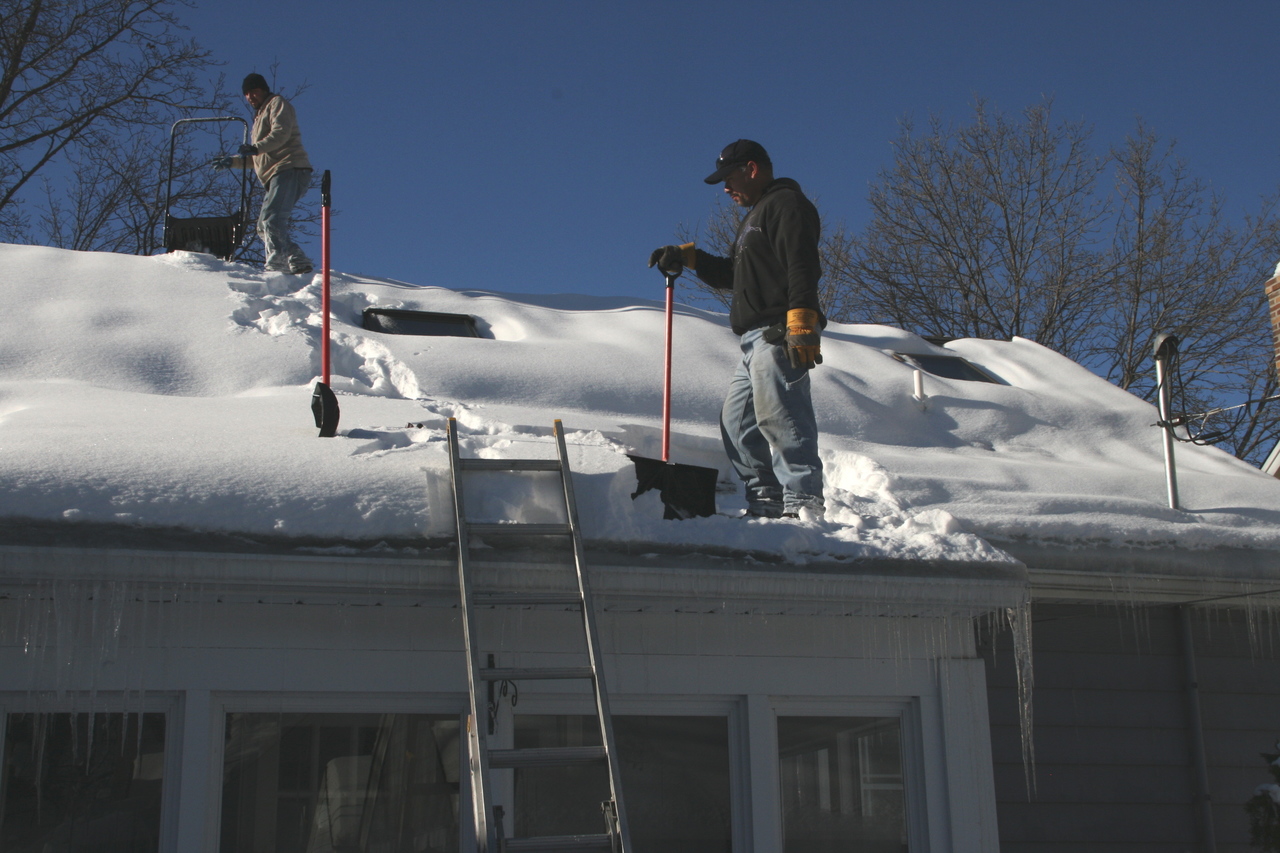
What Does Ice Dam Roof Damage Look Like?
The first signs of ice dam roof damage are not always visible on the roof itself
Homeowners may first notice an interior change
Possible warning signs can include new ceiling discoloration, damp attic insulation, moisture near exterior walls, peeling paint, water around window or wall intersections, wet roof decking, or a leak that appears during a freeze-thaw period
Exterior conditions may include ice concentrated along eaves, visible moisture around roof edges, damaged or displaced roofing materials, gutter problems, or staining below vulnerable roof areas
The key is timing
If an interior stain or leak appears during periods of snow melt and refreezing, an ice dam may be one possible cause, but other roof leaks should still be ruled out
For a more detailed explanation of tracing the actual source of water intrusion, review Roof Leak Repair
Why an Ice Dam Roof Leak Can Be Difficult to Trace
Water does not always appear directly beneath the point where it entered
An ice dam roof leak can travel along decking, framing, insulation, or other building components before becoming visible inside a room
That can make a ceiling stain misleading
For example, water visible near an exterior wall could have entered at the eave, around flashing, through damaged roofing material, or from another location before moving through the structure
A roofing assessment should therefore look beyond the interior symptom
Finding the actual entry path is essential because repairing the wrong location may leave the roof vulnerable during the next thaw
Ice Dam Roof Repair Should Start With the Roofing System
Once water intrusion or roof damage is suspected, the objective is to determine which roofing components were affected
An inspection may need to evaluate the roof covering, eaves, flashing, valleys, roof-to-wall intersections, penetrations, drainage areas, accessible decking, and attic conditions
A professional Roof Inspection & Maintenance assessment can help distinguish ice-related damage from unrelated roof defects that happened to become visible during winter
This matters because Ice Dam Roof Repair can mean very different things from one property to another
A small localized repair may be appropriate in one case
Another roof may require damaged flashing, shingles, or decking to be corrected
A third may need a broader evaluation because the roofing system was already deteriorating before winter
Ice Removal and Roof Repair Are Two Different Jobs
This distinction is especially important
Removing snow or ice from a roof and repairing roofing damage caused by an ice dam are not the same service
Ice removal addresses the accumulation itself
Ice Dam Roof Repair addresses damaged roofing materials, flashing, leaks, moisture entry, and other roof-system problems that remain after or because of the winter event
Wallenpaupack Roofers should therefore be contacted for evaluation and roofing repairs when an ice dam has affected the roof If physical snow or ice removal is required, that work should be handled by an appropriate qualified service provider
This separation also helps avoid a common mistake: assuming the roof is repaired simply because the visible ice is gone
A leak source or damaged component can remain after temperatures rise and the ice disappears
What Should You Do If Water Is Already Entering?
If an ice dam roof leak is active, focus first on protecting the interior while avoiding unsafe roof access
Move belongings away from the affected area when it is safe to do so, monitor the location of visible water, and avoid electrical fixtures or wiring affected by moisture
Do not climb onto an icy or snow-covered roof simply to locate the leak
The exterior source may not be directly above the interior stain anyway
If active water intrusion is significant or roofing materials appear open or damaged, Emergency Roofing Services may be appropriate for evaluating the roofing emergency and determining what protection or repair is needed
Emergency roofing work should still be distinguished from snow or ice removal
The Attic Can Explain What Is Happening on the Roof
Some of the most useful clues are above the ceiling but below the roof
In traditional vented attic assemblies, excessive heat reaching the roof deck can contribute to snow melting higher on the roof ENERGY STAR notes that air sealing combined with attic insulation can help reduce ice-dam formation by limiting heat transfer from the conditioned home into the attic
That makes attic conditions important when repeated ice dams occur
A roofing or building-envelope evaluation may consider insulation coverage, air leakage, ventilation pathways, soffit conditions, attic moisture, exhaust ducts, and roof design
This does not mean every ice dam can be fixed simply by adding insulation or adding vents
The correct solution depends on how the particular roof and attic were designed
Ventilation Can Matter, but More Vents Are Not Automatically the Answer
Ventilation is often mentioned when homeowners research how to prevent ice dams
For traditional vented attic designs, maintaining the intended airflow pathway can help keep attic and roof conditions more consistent Building Science guidance notes that roof ventilation can help minimize freeze-thaw conditions associated with ice-dam formation in appropriate roof assemblies
However, ventilation needs to work with insulation and air sealing
Adding exhaust vents without adequate intake does not automatically solve the problem
Likewise, adding ventilation to a roof assembly that was designed differently can be inappropriate
If attic airflow appears to be part of the problem, review Roof Ventilation Solutions rather than treating vents as a universal ice-dam cure
Insulation and Air Sealing Are Often Part of the Bigger Picture
An attic can have insulation and still allow warm indoor air to reach the roof deck
Air can move through gaps around ceiling penetrations, attic hatches, plumbing openings, electrical penetrations, and other pathways
ENERGY STAR specifically identifies attic air sealing and insulation as measures that can help alleviate ice-dam formation
This is one reason repeated ice dams deserve more investigation than a one-time exterior repair
Ice Dam Roof Repair may restore the damaged roofing components, while a separate insulation or building-envelope improvement may be necessary to address the conditions contributing to recurring ice formation
The two tasks solve different parts of the problem
Roof Design Can Influence Ice Dam Risk
Two homes with similar insulation can still behave differently during winter
Roof design can influence how snow, heat, and meltwater interact
Important variables can include roof slope, valleys, dormers, changes in roof elevation, heated spaces below particular roof sections, eave construction, attic configuration, and where snow tends to accumulate
Complex roof shapes can also create locations where water and snow behave differently from a simple gable roof
That means how to prevent ice dams cannot be reduced to one universal product or one modification
The building needs to be evaluated as it actually exists
Why Eaves Are a Critical Area
Ice dams commonly become visible near the eaves because roof edges can remain colder than areas above heated portions of the building
Department of Energy building-science guidance specifically addresses cold-climate eaves and the need for appropriate protection against water that may move beneath roofing materials
When Ice Dam Roof Repair involves an eave area, the contractor may need to examine more than the visible shingles
The condition of underlayment, roof deck, flashing, drip edge, and surrounding materials may also matter
If damage is discovered during a future roof replacement, eave protection and attic design should be reviewed as part of the complete roofing system
Gutters Can Show Symptoms but Are Not Always the Cause
Ice is often highly visible around gutters, which can make homeowners assume the gutter system created the ice dam
The relationship is more complicated
Gutters and drainage should remain functional, but the underlying cause of an ice dam may involve heat loss, roof temperature, attic conditions, or roof design rather than the gutter alone
Damaged, sagging, or displaced gutters still deserve attention if winter conditions have affected them
But replacing a gutter without investigating the roof and attic may not address recurring ice formation
The correct approach is to look at the entire path: snow on the roof, melting, refreezing, roof-edge conditions, and final drainage
How to Prevent Ice Dams Before the Next Winter
Homeowners researching how to prevent ice dams should focus on reducing the conditions that repeatedly create them rather than relying on a quick seasonal fix
For many traditional vented attic homes, useful areas to evaluate include attic air leakage, insulation coverage, intended ventilation pathways, roof-edge conditions, drainage, flashing, and existing roofing defects
The US Department of Energy and ENERGY STAR both emphasize insulation and air sealing as important parts of reducing ice-dam conditions
Winter preparation should also include a broader review of the roofing system
Our Winter Roofing Checklist covers additional items such as shingles, flashing, gutters, drainage, attic conditions, ventilation, and other roof areas worth reviewing before freezing weather becomes persistent
If excessive snow or ice accumulation is already present, homeowners should avoid unsafe roof access Physical removal should be left to an appropriate qualified service provider, while roofing contractors can assess and repair damage to the roofing system
Ice Dam Roof Repair vs Preventive Work
These two categories should not be confused
Repair addresses something that has already failed or been damaged
Preventive work addresses conditions that may contribute to future problems
For example, Ice Dam Roof Repair might involve correcting damaged shingles or flashing after water intrusion
Preventive work might involve improving attic air sealing, insulation, ventilation, drainage, or another part of the building system
Sometimes both are necessary
Repairing the leak without addressing a recurring heat-loss problem can leave the building vulnerable to another ice dam
But improving insulation without repairing already damaged roofing materials will not restore the damaged roof
Can Ice Dam Damage Be Repaired Without Replacing the Roof?
Yes, in some situations
Ice dam roof damage does not automatically mean the entire roofing system needs replacement
A localized repair may be reasonable when damage is confined to a specific area and the surrounding roof remains in suitable condition
The decision changes when the roof already has widespread deterioration, repeated leaks, substantial decking damage, multiple failing areas, or materials that can no longer be repaired dependably
If the damage is localized, Roof Repairs may be the appropriate next step
If inspection shows broader deterioration, the property owner can then compare repair with Roof Replacement based on the actual condition of the roof rather than the presence of an ice dam alone
A Simple Way to Think About the Problem
| What You Notice | What Needs Investigation |
| Ice along the eaves but no leak | Roof and attic conditions |
| New ceiling stain during snow melt | Possible ice dam roof leak or another roof leak |
| Wet attic insulation | Water entry and attic moisture source |
| Damaged shingles near roof edge | Roofing repair requirements |
| Recurring ice dams every winter | Insulation, air sealing, ventilation and roof design |
| Damaged flashing | Localized roof repair |
| Widespread aging plus winter leaks | Repair vs replacement |
| Gutter damage after freezing | Gutter condition plus underlying roof/drainage issue |
The important point is that an ice dam is a symptom of a winter roof condition, while the correct repair depends on what has actually been damaged
Commercial Properties Can Experience Different Ice-Dam Conditions
Commercial buildings can also experience winter roof damage, although their roof assemblies may be very different from residential homes
Low-slope commercial roofs can involve membrane systems, internal drainage, scuppers, rooftop equipment, parapets, and large drainage areas
That means residential advice about soffits, eaves, and attic ventilation should not automatically be applied to every commercial property
A commercial roof with winter leakage should be evaluated according to its specific roof assembly and drainage system
For commercial properties, Commercial Roofing provides information about inspection, repair, and roofing-system needs for business properties
When Ice Dam Roof Repair Becomes Urgent
Not every visible ice dam represents an immediate roofing emergency
The situation becomes more urgent when there is active interior water intrusion, visible roof damage, significant flashing failure, damaged roofing materials, moisture near electrical systems, or other conditions that can continue affecting the property
In those situations, the priority is determining what roofing damage needs attention
The objective should not be to promise a universal same-day solution
Weather, access, roof condition, safety, and the type of repair all affect what work can be completed and when
A responsible Ice Dam Roof Repair recommendation should explain the current roof condition and the appropriate next action rather than relying on emergency marketing language
What Not to Assume After an Ice Dam
One of the biggest mistakes is assuming that every winter leak has the same cause
Another is assuming that every ice dam means the roof needs replacement
It is also a mistake to assume the disappearance of the ice means the roofing problem has disappeared
A useful assessment should answer three different questions:
What created the water path?
What roofing components were damaged?
What conditions could allow the problem to happen again?
Those answers create a much better repair plan than simply responding to the visible ice
Ice Dam Roof Repair in Northeast Pennsylvania
Homes around Greentown, Lake Wallenpaupack, Hawley, Wayne County, Pike County, Monroe County, and surrounding Northeast Pennsylvania communities experience winter conditions that can expose weaknesses in roofing and attic systems
When an ice dam contributes to a roof leak, Wallenpaupack Roofers can inspect the affected roofing area, identify damaged roofing components, and determine whether targeted repair or broader roofing work is appropriate
Wallenpaupack Roofers focuses on the roofing damage associated with winter conditions rather than presenting ice removal itself as a roofing repair
You can also view recent roofing work and company updates through Wallenpaupack Roofers on Instagram
The goal is to repair the roof correctly while helping the property owner understand why the damage occurred
Fix the Damage and Understand Why It Happened
The most useful Ice Dam Roof Repair does two things
First, it identifies and corrects actual roofing damage
Second, it helps determine whether a larger attic, insulation, ventilation, drainage, or roof-design issue deserves additional attention
An ice dam roof leak may begin near the roof edge, but the conditions behind it can involve much more than the visible ice
Air leakage can contribute to uneven roof temperatures
Insulation can affect heat transfer
Ventilation can matter in appropriately designed vented attics
Roof shape can influence snow and water movement
Flashing and roofing condition determine whether trapped water finds a vulnerable path
That is why the best response to winter roof damage is diagnosis rather than guesswork
Repair what has failed, evaluate what contributed to the failure, and prepare the roofing system before the next cycle of snow, melting, and freezing begins
Frequently Asked Questions
What is an ice dam?
An ice dam is a buildup of ice near a roof edge that can interfere with normal drainage Meltwater can collect behind the ice and may move beneath roofing materials if vulnerable areas are present
What causes ice dam roof damage?
Ice dam roof damage can occur when meltwater becomes trapped behind ice and reaches roofing materials, flashing, underlayment, decking, or other vulnerable parts of the roof system
What are the signs of an ice dam roof leak?
Possible signs include new ceiling stains, damp attic insulation, moisture near exterior walls, wet roof decking, peeling finishes, or water intrusion that appears during periods of snow melting and refreezing
Does an ice dam always mean my roof needs repair?
No Visible ice does not automatically mean roofing materials are damaged An inspection can determine whether the roof has experienced water intrusion or physical damage
Can Ice Dam Roof Repair be completed without replacing the entire roof?
Often, localized damage can be repaired when the surrounding roofing system remains in suitable condition Replacement becomes more relevant when deterioration or damage is widespread
How can I prevent ice dams from forming again?
How to prevent ice dams depends on the building, but attic air sealing, appropriate insulation, correct ventilation for vented attic designs, drainage, and roof condition are important areas to evaluate
Is removing an ice dam the same as repairing the roof?
No Ice removal addresses the accumulation itself, while roof repair addresses damaged shingles, flashing, leaks, decking, or other roofing components affected by the winter event
Should I climb onto my roof to remove an ice dam?
Climbing onto an icy or snow-covered roof can be hazardous If physical ice or snow removal is needed, use an appropriate qualified service provider rather than attempting unsafe roof access
Can poor attic ventilation contribute to ice dams?
Ventilation can be one factor in traditional vented attic systems, but insulation, air leakage, roof design, and other conditions also matter Adding vents alone is not a universal solution
When should I arrange Ice Dam Roof Repair?
Arrange a roofing assessment when winter conditions are associated with active leaks, damaged shingles or flashing, wet attic materials, interior water stains, or other signs that the roofing system may have been affected
📞 Call Wallenpaupack Roofers now for fast, professional ice dam roof repair near me!
Or book your free ice dam inspection online and stay protected this winter.