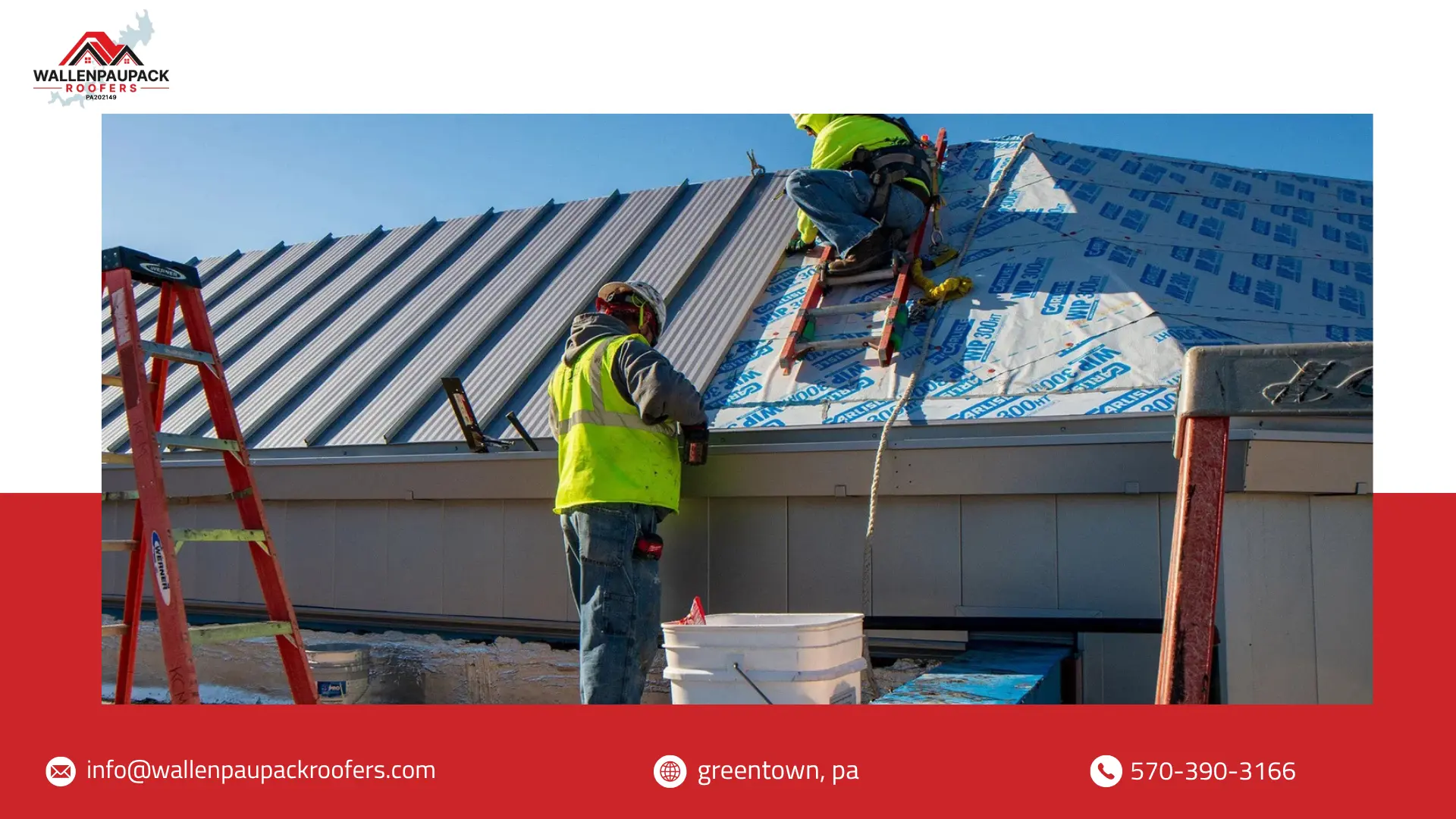
Metal Roofing in Pennsylvania attracts homeowners and commercial property owners for many different reasons Some like the clean architectural appearance of standing seam panels, others are comparing materials during a roof replacement, and some are primarily concerned about snow, maintenance, or long-term ownership
Those are all valid reasons to research metal roofing, but they do not automatically mean that every property should receive the same system
A simple lake-area home with a steep gable roof creates very different installation conditions from a commercial building with low slopes, rooftop equipment, wall transitions, and multiple penetrations Even two residential properties can require different details depending on roof pitch, valleys, chimneys, skylights, structure, attic design, and where snow may leave the roof
That is why Metal Roofing in Pennsylvania should be evaluated as a roofing system rather than as one generic material Standing seam, exposed-fastener panels, metal shingles, coatings, flashings, underlayment, attachment methods, and snow-management details can all change the final result
This guide looks at those differences from a practical Pennsylvania perspective without assuming that metal is automatically better than asphalt shingles or every other roofing material
Start by Understanding What “Metal Roofing” Actually Means
The phrase metal roof covers several systems that may look similar from a distance but behave differently during installation and maintenance
Three broad categories are especially useful for property owners to understand
Standing Seam Metal Roofing
Standing seam metal roofing uses raised seams between panels and commonly relies on concealed clips or fastening systems rather than rows of exposed fasteners across the roof surface Certain standing-seam designs allow the panels to accommodate expansion and contraction as temperatures change The Metal Construction Association notes that standing-seam systems can use concealed clips and that metal panels need to account for thermal movement
Its clean appearance makes it popular for residential, institutional, and commercial architecture
But “standing seam” is still a category rather than one identical product Panel width, seam height, metal type, coating, attachment, substrate, and manufacturer requirements can differ
Exposed-Fastener Metal Roofing
Exposed-fastener systems use mechanical fasteners through the panel face into the supporting structure or substrate
The Metal Construction Association emphasizes that correct fastener selection and compatibility are important to maintaining a strong and weather-tight attachment
These systems may be appropriate for certain residential, agricultural, and commercial buildings, but they should not simply be treated as a cheaper version of standing seam Their attachment and maintenance considerations are different
Metal Shingles
Metal shingles are designed as smaller individual roofing units rather than long standing-seam panels
They can be manufactured to create appearances inspired by:
- Traditional shingles
- Slate
- Tile
- Other architectural roofing styles
They may appeal to homeowners who want some characteristics of metal while preferring an appearance closer to conventional residential roofing
When comparing metal roofing for homes, the correct question is therefore not simply “Do I want metal?”
It is “Which type of metal roofing system fits this roof?”
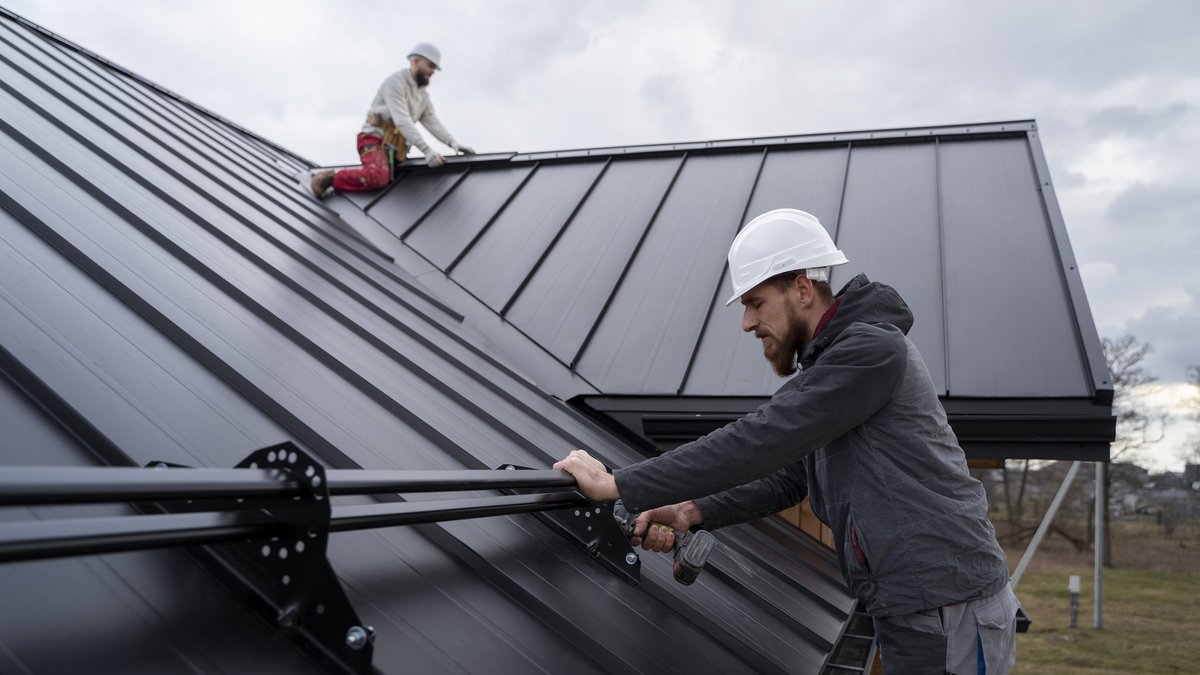
A Quick Comparison of the Main Metal Roof Types
| Factor | Standing Seam | Exposed-Fastener Panels | Metal Shingles |
| Visible fasteners across main roof field | Usually minimized or concealed | Yes | System dependent |
| Appearance | Clean vertical seams | Panel profile | Shingle-like appearance |
| Thermal movement detailing | Important | Important | Product specific |
| Residential use | Common | Possible | Common |
| Commercial use | Common | Common | Less typical |
| Snow behavior | Needs planning | Needs planning | Depends on surface/profile |
| Flashing complexity | System specific | System specific | System specific |
| Maintenance | Periodic inspection | Fasteners/details deserve attention | Product specific |
| Installer experience | Very important | Very important | Very important |
None of these columns creates an automatic winner
The correct system depends on the individual building
The Pennsylvania Question Is Bigger Than “Can Metal Handle Snow?”
Pennsylvania property owners frequently research metal roofs because of winter weather
The issue is more complicated than simply asking whether the material can handle snow
A roof also has to manage:
- Snow accumulation
- Snow movement
- Meltwater
- Ice
- Gutters
- Entrances below the roof
- Walkways
- Decks
- Mechanical equipment
- Lower roof sections
- Landscaping
Smooth metal surfaces can allow accumulated snow to release differently from more textured roofing materials The Metal Construction Association specifically discusses snow retention as an important design consideration for metal roofs in cold climates
That means rapid snow movement can be either useful or problematic depending on what is below the eave
Metal Roofing in Pennsylvania should therefore include a conversation about where snow will go, not just whether it will leave the roof
Snow Retention Is a Design Decision, Not an Accessory Afterthought
Consider a standing seam roof above a front entrance
If snow accumulates and later releases in a large mass, the location below matters
Snow-management planning can be especially relevant above:
- Entrances
- Public walkways
- Driveways
- Decks
- Loading areas
- HVAC equipment
- Landscaping
For standing seam systems, certain snow-retention products can attach using clamps on the seams rather than creating new penetrations through the panel MCA guidance discusses mechanically attached seam-clamp systems for standing-seam roofs
That does not mean every metal roof needs snow guards
It means snow behavior should be considered during design instead of after a problem occurs
Metal Roofing in Pennsylvania Also Has to Handle Temperature Change
Snow gets most of the attention, but seasonal temperature changes are also important
Metal expands and contracts as temperature changes
A professionally designed system needs to accommodate that movement through the panel profile, clips, fasteners, flashing details, or other manufacturer-specific components
Standing seam systems are particularly associated with concealed clips that can allow panel movement
This becomes especially important around:
- Long panel runs
- Roof transitions
- Walls
- Penetrations
- Roof edges
- Ridges
- Valleys
A metal roof installation should follow the requirements of the specific system rather than relying on generic details that happen to work with another panel product
Roof Shape Can Matter More Than Material Marketing
Imagine two houses
The first has a simple gable roof with few penetrations
The second has six valleys, several dormers, two chimneys, skylights, wall intersections, and multiple roof levels
Both owners may choose the same metal product, but the installation complexity is completely different
Every roof transition introduces another location where detailing matters
That makes roof geometry an important factor when comparing Metal Roofing in Pennsylvania
Complex roofs can require greater attention to:
- Valleys
- Sidewalls
- Endwalls
- Chimneys
- Skylights
- Dormers
- Pitch changes
- Upper-to-lower roof transitions
The material is only the visible part of the system
Flashing Is Where Metal Roofing Becomes Highly Detail-Specific
Water rarely cares how expensive the main roof panel is
It looks for vulnerable transitions
Metal roof flashing may be required around:
- Chimneys
- Skylights
- Roof-to-wall connections
- Plumbing vents
- Mechanical penetrations
- Valleys
- Ridges
- Eaves
- Other changes in roof geometry
These areas should be designed for both water management and the movement characteristics of the selected metal system
A poorly detailed flashing condition can undermine an otherwise high-quality roof
That is why installer experience with the actual panel system matters more than simply finding someone who has installed “some metal roofs”
Standing Seam Metal Roofing Is Not One Universal Product
One of the most common mistakes in online metal roof comparisons is treating standing seam as if all systems were identical
They are not
Standing seam metal roofing can differ by:
- Seam profile
- Panel width
- Panel length
- Clip design
- Attachment method
- Metal substrate
- Coating
- Structural requirements
- Minimum slope
- Manufacturer details
A homeowner should ask for the exact manufacturer and product rather than accepting a proposal that only says:
“Install standing seam roof”
The difference is similar to buying a car based only on the words “SUV”
The category tells you something, but not enough
Metal Roofing for Homes: When Does It Make Sense?
Metal roofing for homes may be worth comparing when the property owner values characteristics such as:
- Metal architectural appearance
- Long-term ownership
- A specific standing seam design
- Snow-management planning
- Compatibility with future solar installation
- A roofing material different from conventional asphalt shingles
Standing seam roofs can also be compatible with certain seam-clamped solar mounting systems, allowing some equipment to attach without penetrating the roof panels
But that does not automatically make metal the right roof for every home
Structural compatibility, roof geometry, budget, installation quality, snow behavior, and repair expectations still need consideration
For homeowners comparing multiple materials rather than metal alone, Best Roofing Materials for Pennsylvania Homes provides a broader comparison
The Lake-Area Home Scenario
A home around Lake Wallenpaupack may combine several conditions:
- Snow
- Trees
- Wind exposure
- Multiple roof levels
- Decks
- Large windows
- Visible roof surfaces
- Seasonal occupancy
In this scenario, appearance may make standing seam metal roofing attractive, but the roof also needs practical planning
Questions might include:
Where does snow leave the roof?
Are decks or entrances below those areas?
Can branches strike exposed roof sections?
How are gutters integrated?
Is the home occupied throughout winter?
Is future solar installation being considered?
This illustrates why Metal Roofing in Pennsylvania should be property-specific even within the same region
The Long-Term Homeowner Scenario
Someone planning to stay in a house for many years may evaluate roofing differently from a homeowner expecting to sell relatively soon
The long-term homeowner may place more weight on:
- Future maintenance
- Repairability
- Material availability
- Architectural preference
- Potential future solar work
- Snow-management design
- Complete installed system
That does not mean metal automatically provides better value
It simply means ownership horizon changes how the initial investment is evaluated
The Commercial Building Scenario
Commercial metal roofing requires another set of considerations
A commercial property may include:
- Long panel runs
- Large roof areas
- Mechanical equipment
- Penetrations
- Service access
- Parapets
- Drainage systems
- Multiple building additions
Metal systems can work well on suitable commercial buildings, but their detailing can differ substantially from residential construction
For building owners evaluating commercial applications, Commercial Roofing provides information specific to business properties
This keeps the residential and commercial decisions separate rather than pretending one roof design applies to both
Metal vs Asphalt: Avoid the False Winner
Metal and asphalt shingles are frequently presented online as if one must defeat the other
That is not particularly useful
Architectural asphalt shingles may make more sense when homeowners prioritize:
- Lower initial project cost
- Traditional appearance
- Broad material availability
- Easier access to common repair materials
Metal may deserve stronger consideration when priorities include:
- Metal aesthetics
- Long-term ownership
- Specific standing seam design
- Snow-management characteristics
- Certain solar-mounting possibilities
Neither material is automatically superior
Roof design, budget, maintenance, installation, and ownership priorities decide which option makes more sense
If replacement is already being considered, Roof Replacement can help frame the decision around the condition of the existing roof before a new material is selected
Metal Roofs and Energy Efficiency: The Coating Matters
Metal roofs are often marketed as automatically energy-efficient
That claim needs more nuance
Metal roofing can use different finishes and coatings The US Department of Energy notes that factory- or field-applied paints can increase the solar reflectance and thermal emittance of metal roofing, while unpainted metal does not necessarily provide the same cool-roof performance
So roof color and coating can matter
But building energy use also depends on:
- Insulation
- Air sealing
- Attic or roof assembly
- HVAC performance
- Sun exposure
- Building use
- Climate
Metal Roofing in Pennsylvania should therefore not be sold with a guaranteed percentage reduction in utility bills
For a complete explanation of these factors, see Energy-Efficient Roofing
Metal Roof Installation Starts Below the Panels
The panels may receive all the attention, but metal roof installation begins with what is below them
The project may need to consider:
- Structural deck
- Existing roofing materials
- Underlayment
- Roof slope
- Ventilation
- Ice and water protection where appropriate
- Flashing substrate
- Panel attachment
- Drainage
Installing premium panels over an unsuitable roof deck or unresolved moisture problem does not create a premium roofing system
Before a major project, a Roof Inspection & Maintenance assessment can help determine whether decking, flashing, drainage, or other existing conditions deserve attention
Can Metal Roofing Be Installed Over an Existing Roof?
Sometimes a metal roofing system may be installed as part of a retrofit approach over an existing roof, but this should never be treated as an automatic shortcut
The existing roof and structure still need evaluation
Important questions include:
- Is moisture trapped in the existing assembly?
- Is decking damaged?
- How many roof layers already exist?
- Does the structure support the proposed system?
- How will the new panels be attached?
- How will roof edges and flashing be handled?
- Does the proposed manufacturer allow the assembly?
- What local requirements apply?
A retrofit should be a technical decision, not simply a way to avoid tear-off
Metal Roofing in Pennsylvania Needs Underlayment Planning Too
Metal is the exterior roof covering
It does not eliminate the need to consider the rest of the water-management system
Underlayment decisions can depend on:
- Roof slope
- Panel system
- Deck type
- Project design
- Weather exposure
- Manufacturer requirements
Cold-weather regions also make roof-edge and ice-related protection important considerations
The correct assembly should be specified before installation begins rather than allowing underlayment to become an afterthought
What Happens Around Skylights and Chimneys?
Skylights and chimneys interrupt long runs of metal panels
That creates additional flashing and layout considerations
A new metal roof may require careful planning around:
- Upslope water flow
- Side flashing
- Downslope transitions
- Panel seams
- Existing curb dimensions
- Roofing material movement
When an existing skylight is already aging or leaking, it can be sensible to evaluate its condition before installing a new roof around it
For skylight-specific work, see Skylight Installation & Repair
Metal Roofing and Gutters Need to Be Planned Together
Snow and rain do not stop at the eave
Gutters need to receive and move water away from the building
With metal roofing, property owners should consider:
- Roof slope
- Water flow
- Gutter capacity
- Downspout placement
- Snow movement
- Snow-retention design
A high-volume roof area directing water toward an undersized gutter can still create drainage problems regardless of the roofing material
Likewise, uncontrolled sliding snow can affect gutters when the system is not planned around winter conditions
The Cost of Metal Roofing Cannot Be Reduced to One Price per Square Foot
Online price ranges often create unrealistic expectations because metal roof projects vary substantially
Cost can depend on:
- Roof area
- Panel system
- Metal type
- Coating
- Roof slope
- Roof complexity
- Tear-off
- Deck repairs
- Underlayment
- Flashing
- Panel length
- Valleys
- Dormers
- Chimneys
- Skylights
- Snow-retention requirements
- Access
- Labor
- Installation method
A simple rectangular gable roof can be dramatically different from a complex multi-level home even if both use the same standing seam product
That is why Metal Roofing in Pennsylvania should be priced from the actual property rather than from one generic online number
Compare Complete Metal Roofing Proposals
If you receive multiple estimates, make sure you are comparing the same roofing systems
A useful proposal should identify details such as:
| Item | What to Compare |
| Metal system | Standing seam, exposed fastener, shingles, etc |
| Manufacturer | Exact manufacturer |
| Panel/product | Specific profile or system |
| Metal/coating | What is being installed |
| Existing roof | Tear-off, retrofit, or new construction |
| Underlayment | Proposed system |
| Flashing | Chimneys, walls, valleys and penetrations |
| Fastening | Concealed clips, exposed fasteners, other |
| Snow management | Whether it is needed and where |
| Gutters | Existing or coordinated changes |
| Warranty | Product vs workmanship |
| Repairs | How future repairs would be handled |
Two quotes can both say “metal roofing” while describing very different projects
Myth: Every Metal Roof Is Noisy
Metal roofs can sound different from other roof coverings, but the interior sound level depends on the complete roof assembly rather than the metal surface alone
Decking, insulation, attic space, underlayment, ceilings, and building design can all influence how exterior sound is transmitted indoors
An agricultural building with exposed metal panels over open framing creates a very different acoustic environment from a residential metal roof installed over solid decking and an insulated attic
The building matters
Myth: Metal Roofing Attracts Lightning
A metal roof does not need to be avoided simply because metal conducts electricity
Lightning protection is a building-design issue, and metal roofing is routinely incorporated into structures with appropriate lightning-protection systems where required MCA guidance discusses methods for integrating lightning-protection components with metal roofs
The roofing material itself should not be treated as proof that a building will attract lightning
Myth: Metal Roofs Never Need Maintenance
Metal roofing can reduce certain maintenance concerns compared with some roofing systems, but it should not be treated as maintenance-free
MCA materials recommend periodic inspection for issues such as debris and blocked drainage, even on premium metal roof systems
Metal roof maintenance may include checking:
- Roof edges
- Flashing
- Penetrations
- Fasteners where exposed
- Sealants where applicable
- Snow-retention components
- Gutters and drainage
- Debris
- Coating damage
- Previous repair areas
The exact maintenance needs depend on the metal roofing system
Exposed Fasteners Deserve Particular Attention
On exposed-fastener roofs, fasteners are a visible and functional part of the weathering system
Compatible fasteners need to be selected for the roofing material and application MCA specifically emphasizes compatibility between fasteners and profiled metal roofing panels
Over time, inspections may look for conditions such as:
- Loose fasteners
- Damaged washers
- Corrosion
- Movement
- Improper previous repairs
These concerns do not automatically mean an exposed-fastener roof is a poor system
They simply illustrate why metal roof maintenance differs according to the system installed
Standing Seam Maintenance Looks Different
Standing seam metal roofing reduces or eliminates many exposed field fasteners, but other roof details still need evaluation
Inspection may focus on:
- Seams
- Clips where relevant to the system
- Flashing
- Roof penetrations
- Panel edges
- Snow-retention attachments
- Coating condition
- Drainage
Again, no roof should be described as “install it and forget it”
What If a Metal Panel Becomes Damaged?
Localized metal roof damage does not automatically require complete roof replacement
Repairability depends on:
- Panel profile
- Location of damage
- Panel length
- How panels interlock
- Flashing
- Availability of matching materials
- Surrounding roof condition
A damaged panel near an accessible roof edge may present a different repair situation from one locked beneath multiple panels near a complicated penetration
For localized roofing problems, Roof Repairs can help determine whether targeted repair is practical
Matching Future Metal Panels Can Matter
Homeowners often focus on today’s roof appearance without thinking about future repairs
Before selecting an uncommon profile or finish, ask:
- Will this system likely remain available?
- Is it proprietary?
- Can replacement panels be fabricated?
- Can the coating be reasonably matched later?
- Are accessories available?
- Are qualified installers familiar with the system?
No manufacturer can guarantee every finish will remain unchanged indefinitely
Future repairability should therefore be part of the original selection process
When Does Metal Roof Replacement Become More Relevant?
A metal roof should not be replaced simply because it reaches an arbitrary age
Condition matters more
Broader work may become relevant when there is:
- Widespread corrosion
- Extensive panel damage
- Repeated leaks in several areas
- Major attachment-system problems
- Significant deck deterioration
- Numerous failed transitions
- Large-scale building changes
Localized problems may still be repairable
The correct decision comes from inspection rather than a fixed lifespan claim
That is why this version avoids promising that every metal roof lasts a specific number of decades
New Construction Creates More Flexibility
Metal roof installation can be particularly interesting during new construction because the building can be designed around the roofing system instead of retrofitting metal onto an existing structure
Designers can coordinate:
- Roof slope
- Structural deck
- Panel lengths
- Penetrations
- Snow movement
- Gutters
- Ventilation
- Flashing
- Future solar equipment
For new buildings, review New Roof Installation when moving from planning into installation
Metal Roofing in Pennsylvania After Storm Damage
Metal roofing can still be affected by severe weather
Possible concerns may include:
- Impact damage
- Displaced flashing
- Tree or branch impact
- Damaged roof edges
- Gutter damage
- Penetration damage
Not every dent represents a functional leak, and not every storm requires panel replacement
The actual roof condition should determine the repair
If a recent storm has affected the property, Storm Damage Roof Repair provides information about evaluating roofing damage after severe weather
Before Choosing Metal, Decide What Matters Most
Instead of asking whether metal is “the best roof,” property owners can narrow the decision using priorities
If Architectural Appearance Matters Most
Compare standing seam profiles, metal shingles, panel width, seam height, and finish
If Snow Behavior Matters Most
Evaluate roof slope, eave locations, entrances, snow retention, gutters, and areas below the roof
If Long-Term Ownership Matters Most
Compare the complete installed system, maintenance, repairability, warranties, and future material availability
If Initial Budget Matters Most
Compare metal with architectural shingles and other compatible systems instead of assuming a premium system will automatically provide better value
If Future Solar Is Important
Discuss panel layout and mounting compatibility before the roof is installed Certain standing-seam systems may allow seam-clamped solar attachments without penetrating the panels
This priority-based approach is much more useful than ranking every roofing material with one score
Questions Worth Asking a Metal Roofing Contractor
Before approving Metal Roofing in Pennsylvania, ask questions that reveal what system is actually being proposed:
- What exact metal roof system are you recommending?
- Why does it fit this roof?
- What manufacturer and profile will be used?
- How is the system attached?
- How does it accommodate thermal movement?
- What underlayment is included?
- How will valleys be detailed?
- How will chimneys and skylights be flashed?
- Does this roof need snow retention?
- How will gutters interact with snow movement?
- What metal roof maintenance will be required?
- How would damaged panels be repaired later?
- What warranties apply?
- Do you regularly install this specific system?
A useful contractor should be able to answer those questions without relying on generic statements that metal is “better than everything else”
Local Metal Roofing Support in Northeast Pennsylvania
Wallenpaupack Roofers works with residential and commercial roofing systems throughout Greentown, Hawley, Lake Wallenpaupack, Wayne County, Pike County, and surrounding Northeast Pennsylvania communities
For property owners considering Metal Roofing in Pennsylvania, the starting point should be the roof itself: slope, structure, geometry, drainage, flashing, snow exposure, and long-term project goals
A metal roof installation should then be designed around those conditions rather than chosen solely because metal is viewed as a premium material
You can also view recent roofing projects and company updates through Wallenpaupack Roofers on Instagram
The right system is the one that fits the property and can be installed and maintained correctly over time
Make the Metal Roof Fit the Property
Metal Roofing in Pennsylvania can be a strong option for many homes and commercial buildings, but there is no single metal roofing system that should be installed everywhere
Standing seam metal roofing offers one type of attachment and architectural appearance
Exposed-fastener panels use a different attachment approach and require different inspection considerations
Metal shingles create another option for metal roofing for homes where a smaller-format residential appearance is preferred
Beyond the profile, successful performance depends on the details:
- Roof slope
- Deck
- Underlayment
- Flashing
- Thermal movement
- Fasteners or clips
- Snow behavior
- Gutters
- Penetrations
- Coatings
- Maintenance
Pennsylvania’s snow and seasonal temperature changes make several of these details especially important
A smooth metal surface can change snow behavior
Temperature movement needs to be accommodated
Roof edges and flashing must work with the selected panel
And metal roof maintenance should be planned according to the specific system rather than ignored because metal is sometimes advertised as maintenance-free
The best decision is therefore not to ask whether Metal Roofing in Pennsylvania is universally better than asphalt, slate, composite, or another roofing material
The better question is whether the selected metal roofing system is appropriate for the individual property, installed according to its design requirements, and practical to maintain and repair in the future
Frequently Asked Questions
Is Metal Roofing in Pennsylvania a good choice for homes?
It can be a good option for many homes when the roof slope, structure, architecture, snow-management needs, budget, and selected metal roofing system are appropriate for the property
What is standing seam metal roofing?
Standing seam metal roofing uses panels with raised seams and commonly uses concealed clips or fastening systems across the main roof field Specific designs vary by manufacturer and system
Is standing seam better than exposed-fastener metal roofing?
Not automatically The systems have different attachment, design, cost, appearance, and maintenance characteristics The appropriate choice depends on the property and project requirements
Does snow slide off metal roofs?
Smooth metal surfaces can allow accumulated snow to move or release differently from textured roofing materials Snow-retention planning may be appropriate depending on roof slope and what is located below the roof
Does a metal roof automatically lower energy bills?
No Some coated metal roofing products can provide useful solar-reflective characteristics, but actual building energy use also depends on insulation, air sealing, HVAC performance, climate, building use, and other factors
Does metal roofing require maintenance?
Yes Metal roof maintenance may include periodic inspection of flashing, penetrations, roof edges, drainage, exposed fasteners where applicable, snow-retention components, coating condition, and previous repairs
Can a damaged metal roof be repaired without complete replacement?
Often, localized problems can be repaired when compatible materials are available and the surrounding roofing system remains serviceable Repair feasibility depends on the panel system and location of the damage
Is metal roofing suitable for Pennsylvania snow?
Metal roofing can be used successfully in snowy climates, but roof slope, structure, snow movement, snow retention, gutters, entrances, and other areas below the roof should be considered during design
How much does metal roofing cost in Pennsylvania?
There is no useful single price for every property Cost depends on roof area, metal system, profile, coating, complexity, tear-off, deck work, underlayment, flashing, snow management, access, and installation requirements
What should I compare before choosing a metal roof?
Compare the exact roofing system, manufacturer, panel profile, attachment method, underlayment, flashing, snow-management requirements, maintenance, repairability, warranties, installer experience, and complete installed project scope
Your roof deserves the best care — and we’re right near you. Contact Wallenpaupack Roofers today for your free inspection and see why we’re the top-rated metal roofing company near me in Pennsylvania!